
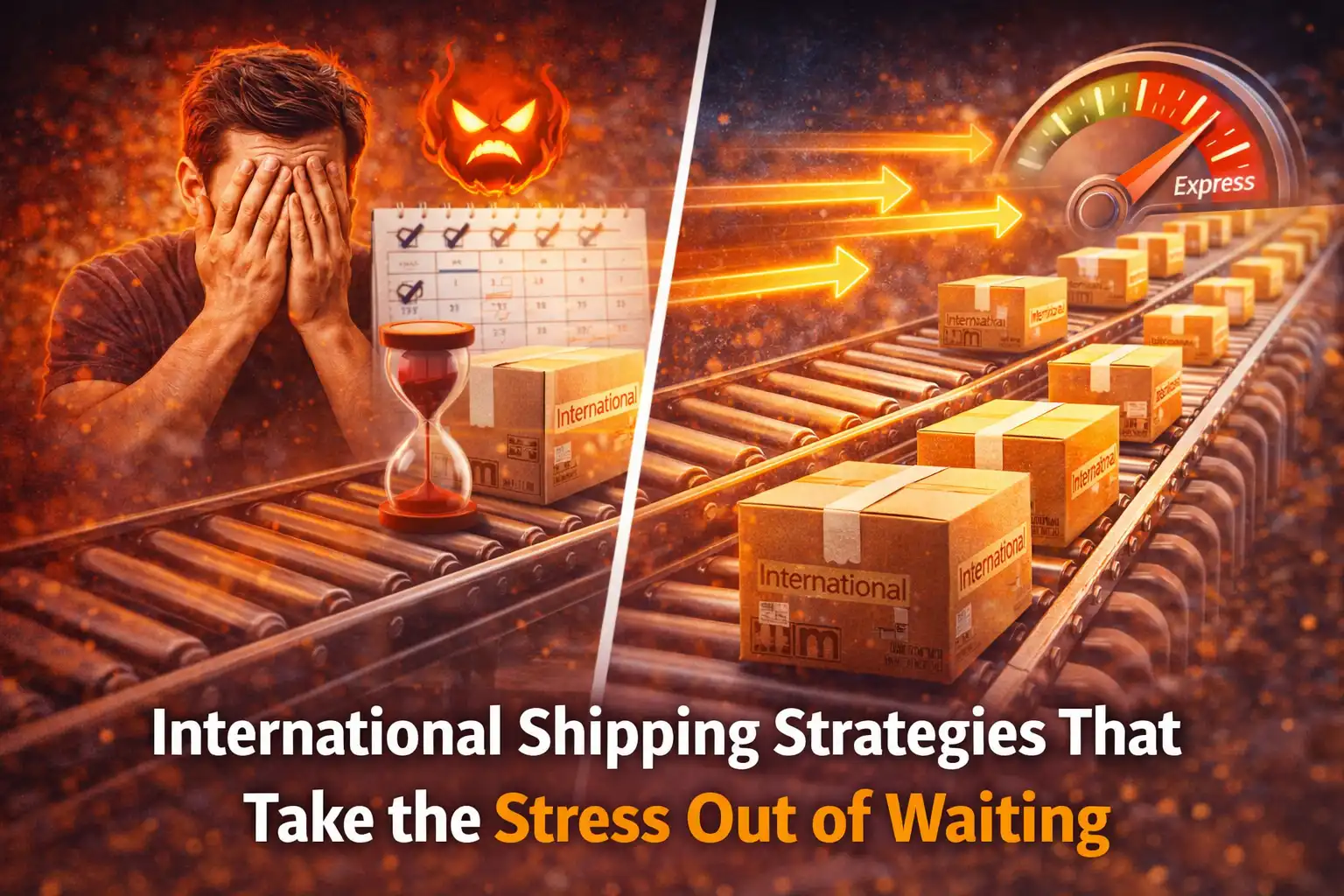
Most people think international shipping is the problem.
They blame delays, tracking gaps, or long delivery times. They compare it to local marketplaces and feel something is wrong when it doesn’t behave the same way. But after you spend enough time actually using platforms like AliExpress, you start to see a different picture. The system isn’t broken. It’s just misunderstood.
The real issue is not how fast the package moves, but how the buyer positions themselves inside that system. If you expect speed, you will always feel disappointed. If you build a flow, the exact same system starts to feel stable, predictable, and even efficient. This is why two people can use the same platform, same shipping method, and have completely different experiences.
This is also the reason why this strategy is not limited to AliExpress alone. The same pattern appears across global marketplaces like eBay, Amazon international sellers, Temu, and others. Whenever cross-border shipping is involved, the logic stays the same: longer routes, more checkpoints, less real-time visibility. Once you understand how to work with that instead of against it, everything becomes easier.
Where most people get trapped without realizing it
The problem usually starts with a simple habit that feels normal.
- buying only when something is needed
- waiting for that one package
- checking tracking repeatedly
- expecting movement every day
At first, it seems reasonable. But in reality, this creates a fragile system where everything depends on a single shipment. The moment that shipment slows down, the entire experience collapses into frustration.
👉 This is the first mistake: depending on one outcome.
The moment you stop waiting and start managing flow
There is a clear turning point in how experienced buyers operate.
They stop asking:
👉 “When will this package arrive?”
And start asking:
👉 “How do I make sure something is always arriving?”
That shift sounds simple, but it completely changes how you interact with global marketplaces. You are no longer tied to a single delivery. You are managing a sequence of deliveries, and that removes emotional pressure almost instantly.
How the flow system actually works in practice
Let’s break it down in a structured way so it’s easy to follow.
Instead of placing one order and waiting for it to arrive, you begin placing orders consistently over time. For example, you might order every few days or once a week. At the beginning, nothing feels different because all shipments are still in transit. But after the first cycle completes, something important happens.
Packages start arriving in intervals. Not because shipping became faster, but because your orders were distributed across time. What used to be a single long wait becomes a continuous sequence of arrivals. The system itself didn’t change. Your positioning inside the system did.
Why this starts to feel faster without actually being faster
This is where perception changes.
Economy shipping still takes the same amount of time per shipment. But because multiple shipments are moving at once, the gap between arrivals becomes shorter. Instead of waiting a long time for one package, you begin receiving packages more frequently.
👉 This is the key shift: frequency replaces speed.
Once you reach this stage, the experience no longer feels slow. It feels consistent. And consistency is what removes stress.
Using small, repeated orders to reduce cost and increase control
Another layer that makes this strategy even more effective is how you structure your orders. Instead of placing one large order, you split your purchases into smaller batches. This is especially useful when combined with platform promotions such as shipping discounts or free shipping thresholds.
By keeping orders within certain limits, you can repeatedly take advantage of these benefits. Over time, this reduces overall shipping cost while allowing you to maintain a steady ordering rhythm.
- smaller batches allow repeated use of promotions
- cost becomes distributed instead of concentrated
- delays affect less of your total supply
This approach is not only more flexible, but also more sustainable in the long run.
Why buffer stock removes almost all stress
One of the most overlooked parts of this system is buffer stock. This simply means keeping extra inventory so you never reach a point where you urgently need something. The moment urgency enters the equation, your experience changes. You begin expecting speed from a system that is not designed for it.
With buffer stock, that pressure disappears. You are no longer dependent on a single shipment. Even if one package is delayed, your operations continue without disruption. This allows you to stay calm and make decisions based on logic instead of urgency.
When paying for speed actually makes sense
There are situations where waiting is not an option. In those cases, express shipping becomes the right choice. Services like DHL or FedEx are designed for speed and priority handling. They cost more, but the value they provide is time.
👉 You are not paying for the product — you are paying for speed.
The key is knowing when to use it. Economy shipping is for planned supply. Express shipping is for urgent needs. When you separate these clearly, your system becomes much more efficient.
The part most people only understand after experience
At some point, after repeating this system, something becomes clear.
AliExpress—and other global marketplaces—are not slow. They are simply not designed for reactive behavior. If you wait until you need something and then expect fast delivery, the system will always feel frustrating. But if you plan ahead, distribute your orders, and maintain a flow, the same system becomes stable and predictable.
What changes is not the platform. What changes is how you use it.
If you want to explore how buyers structure their sourcing and maintain consistent supply without stress, you can check:
When everything finally starts to make sense
In the end, this is not about making shipping faster. It’s about removing dependency on a single outcome. Once you stop relying on one package and start managing a flow of deliveries, the experience changes completely.
You are no longer waiting.
You are receiving.
And that’s the difference between frustration and control when dealing with international shipping on platforms like AliExpress.
A simple question worth thinking about
Are you still waiting for one order to arrive…
or are you starting to build a system where something is always on the way?