
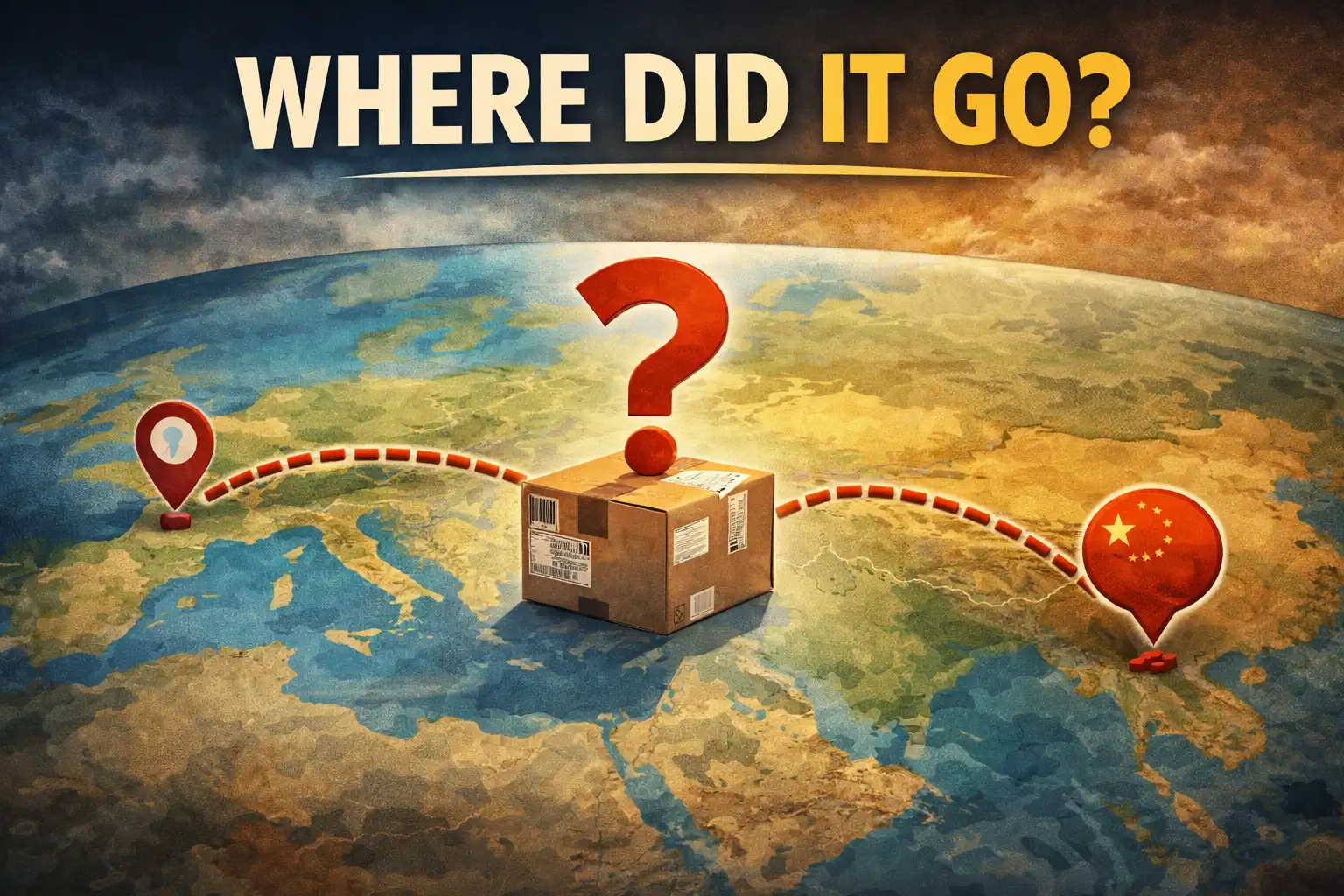
For many buyers, the experience starts the same way.
You place an order, everything looks fine, tracking appears normal at first, and then… something changes. The updates slow down, the location becomes unclear, or worse—the package simply stops moving. Days turn into weeks, and eventually you’re left wondering whether the item is delayed or completely lost.
This is one of the most common frustrations in global marketplaces.
Not because the product is bad. Not because the seller failed. But because something happened during delivery—and it’s not always clear where or why.
Where things start to feel uncertain
At the beginning, everything seems under control.
You receive confirmation, tracking starts updating, and the system shows progress. But international shipping doesn’t move in a straight, transparent line. There are long gaps where packages are in transit but not scanned, especially when moving between countries or logistics hubs.
This creates a situation where:
- tracking appears inactive
- location updates become vague
- delivery estimates start to drift
👉 And this is where doubt begins
Because from the buyer’s perspective, it feels like the package disappeared.
When “missing” doesn’t always mean lost
One of the biggest misunderstandings is assuming that no update means no movement.
In reality, international logistics involves multiple handovers:
- export processing
- cross-border transit
- customs clearance
- local distribution
At certain stages, especially during transit or bulk processing, packages are not scanned individually. They move as part of a larger batch.
👉 So the system looks silent… but the package is still moving
However, this lack of visibility creates anxiety, especially for buyers who are used to real-time tracking in local deliveries.
Why delivery estimates often feel inaccurate
Another common complaint is that delivery timelines don’t match reality.
This happens because estimated delivery is not a fixed promise—it’s a projection based on average conditions. But in global shipping, many variables can shift that estimate:
- customs delays
- routing changes
- carrier handovers
- local delivery backlog
👉 Even small disruptions can push timelines significantly
So what feels like “wrong estimation” is often the result of a system dealing with unpredictable variables.
The real weak point: last-mile delivery
This is where the most important insight comes in.
👉 The biggest weakness is not the product—it’s the last-mile delivery
The final stage, when the package reaches your country and is handed to a local courier, is where most issues occur:
- packages marked delivered but not received
- incorrect drop-off locations
- missed delivery attempts
- poor communication
This is the point where control shifts away from the international system and into local logistics networks.
Why third-party couriers get blamed so often
From a user perspective, it feels natural to blame whoever delivers the package.
And in many cases, that’s actually where the issue occurs.
Local courier companies often operate under:
- high delivery volume
- tight schedules
- cost pressure
This can lead to inconsistent service quality. Some deliveries go smoothly, while others fall short of expectations.
👉 So while the platform connects everything, the final experience depends heavily on the local courier
When multiple small issues create a bigger problem
Individually, each issue might seem manageable:
- slight delay
- missing scan
- unclear tracking
But when combined, they create a perception of chaos.
The buyer experiences:
- uncertainty
- lack of control
- unclear responsibility
And this is what turns a normal delay into a frustrating experience.
How experienced buyers reduce this risk
Over time, experienced users don’t try to eliminate the system’s complexity—they work around it.
They:
- choose sellers with better shipping history
- avoid relying on a single urgent shipment
- build a flow of orders instead of one-time purchases
- accept that tracking gaps are normal
👉 This doesn’t remove risk, but it reduces impact
The mindset shift that changes everything
Instead of thinking:
❌ “Why is my package missing?”
Try thinking:
✔ “Where is the package in the system right now?”
This reframes the situation from panic to understanding.
Because in most cases, the package is not gone—it’s just between systems.
If you want to see how buyers select products and shipping options based on delivery reliability, seller consistency, and logistics behavior, you can explore:
These are not purchase recommendations, but examples of how experienced buyers reduce delivery risk before placing an order.
When the system starts to feel predictable
AliExpress delivery is not perfectly transparent.
But it is not completely random either.
Once you understand:
- how tracking gaps happen
- where delays usually occur
- why last-mile delivery is critical
👉 the experience becomes easier to navigate
You stop reacting to every delay and start recognizing patterns instead.
A simple question to reflect on
Are you assuming your package is lost…
or are you starting to understand where it might be in the process?