
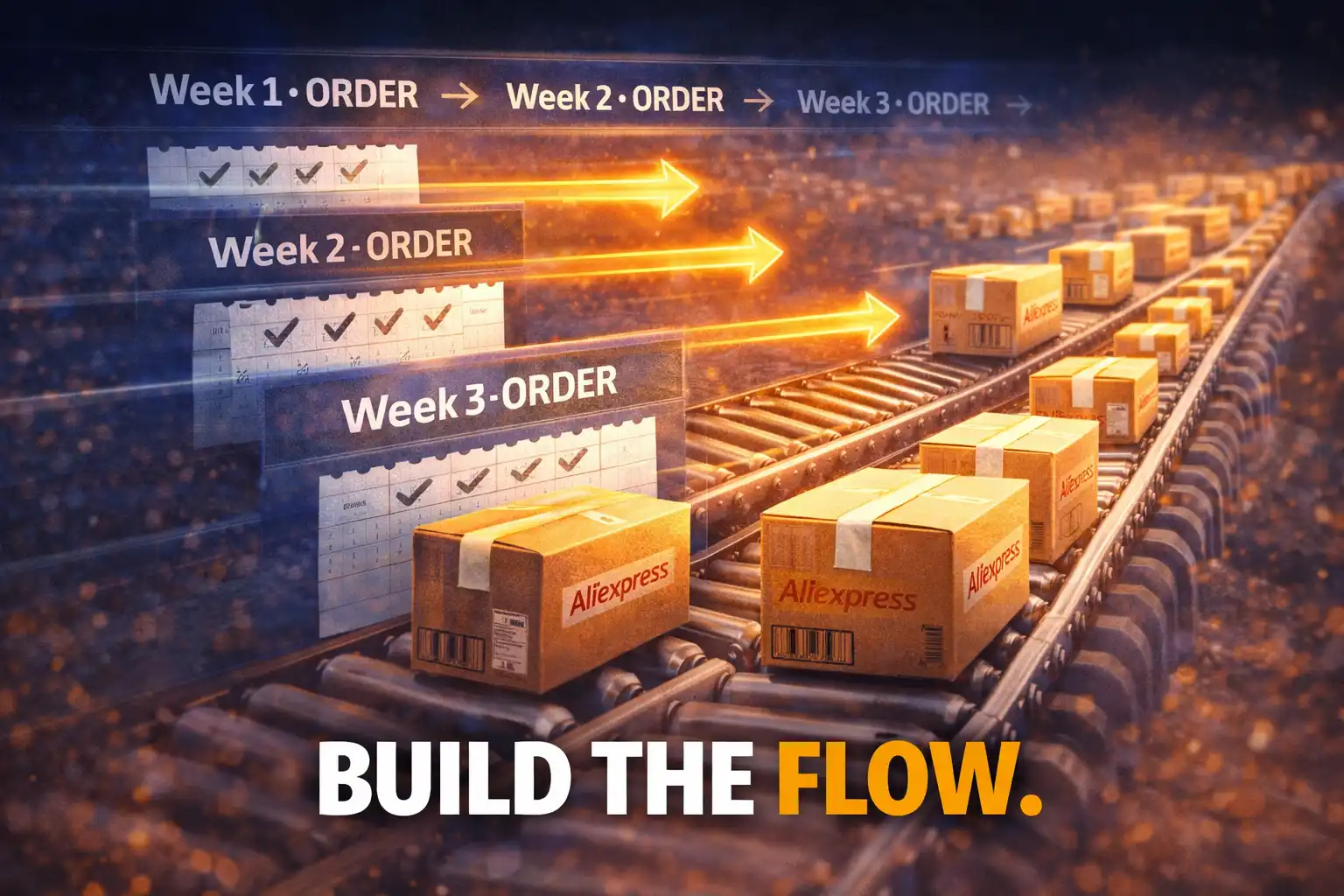
Most people assume economy shipping is slow because they only experience it one way: place an order, wait, and hope it arrives quickly. When it doesn’t, they conclude the system is bad. But that conclusion comes from a limited perspective. Economy shipping is not designed to feel fast per order. It is designed to be efficient across time. Once you understand that distinction, the experience changes completely.
The real issue is not the shipping method, but the way people use it. Many buyers approach AliExpress with a local marketplace mindset, expecting fast delivery, constant tracking updates, and predictable timing. But AliExpress operates on a completely different system—one that involves international logistics, multiple handling stages, and variable routing. When expectations don’t match reality, frustration is almost guaranteed.
If you want to use AliExpress comfortably, especially for sourcing or repeat purchases, you need to stop thinking in terms of “when will this arrive” and start thinking in terms of “how do I create a continuous flow.” That shift is what separates stressful experiences from controlled, predictable ones.
Where most frustration actually begins
Look at the common pattern most buyers follow:
- they order only when they need the item
- they wait for that one shipment
- they check tracking repeatedly
- they become anxious when updates slow down
This creates a single point of dependency. Everything depends on one package. So when that package slows down—even slightly—it feels like the entire system is failing. In reality, nothing is broken. The system is working as designed, but the usage pattern is creating pressure.
When everything depends on one shipment, stress is inevitable
When you only have one active order, your attention becomes hyper-focused on it. Every tracking update feels important, every delay feels suspicious, and every quiet period feels like something went wrong. But international logistics does not operate with constant visibility. There are long gaps where packages are moving but not being scanned.
Now compare that with a different situation: multiple orders in progress at the same time. Your focus shifts from one package to an overall flow. Even if one shipment is delayed, others are still arriving. At that point, your experience changes from “waiting for something” to “receiving regularly.”
This is where the approach needs to change
Instead of using this pattern:
❌ order → wait → order again
You move into:
✔ order → order again → order again → let it run
This is not a trick. It is a simple supply flow.
When the flow starts forming, the experience changes
Let’s assume the average delivery time is around 30 days. If you begin placing orders consistently—every few days or once a week—nothing feels different at first because all shipments are still in transit. But once the first cycle completes, something shifts.
Your first package arrives, then a few days later another one follows, and then another. The gap between arrivals becomes shorter. At that point, you are no longer waiting 30 days for a single item. You are receiving items regularly within shorter intervals. The system has not become faster, but your experience has.
Why this can feel like “7-day delivery”
Economy shipping itself does not suddenly become fast. What changes is the distribution pattern of your deliveries. Because you have already placed multiple orders earlier, they begin arriving one after another. This creates the illusion of speed because something is always arriving within a short time frame.
It is similar to planting crops at different times instead of all at once. If you plant everything on one day, you harvest once. If you plant regularly, you harvest continuously. The shipping system behaves the same way. The timing of your actions determines the rhythm of your results.
Splitting orders can make the system more efficient
Another important layer is how you structure your orders. Instead of placing one large order, experienced buyers often split them into smaller batches. This is especially useful when dealing with shipping thresholds, vouchers, or promotional limits such as weight-based benefits.
By keeping orders within certain limits (for example, around 1 kg per order), you can repeatedly take advantage of shipping discounts or even free shipping offers when available. This reduces overall cost while allowing you to maintain a steady ordering rhythm.
- smaller orders can qualify for repeated promotions
- cost becomes distributed instead of concentrated
- risk is reduced across multiple shipments
Over time, this approach is often more flexible and financially manageable than placing one large order.
Why this approach feels lighter over time
When you place a single large order, everything depends on that shipment. If it is delayed, the impact is significant. But when you split orders and spread them over time, delays become less important. One shipment being late does not disrupt your entire supply.
This also improves cash flow. Instead of committing a large amount at once, you gradually invest in inventory. This is one of the reasons why many small-scale sellers and resellers prefer this method when using AliExpress as a sourcing platform.
Buffer stock is what removes pressure completely
One of the most important elements in this system is buffer stock. This simply means you always keep extra inventory and never allow your stock to reach zero. The moment you rely on an incoming shipment to continue operating, you lose control and become dependent on timing.
With buffer stock, you gain flexibility. Even if one shipment is delayed, your operations continue without disruption. This eliminates the emotional pressure that usually leads to frustration. Instead of reacting to delays, you anticipate them.
There are moments when speed actually matters
Not everything should use economy shipping. There are situations where speed is critical, such as urgent repairs, essential replacements, or time-sensitive needs. In these cases, using express shipping services like DHL or FedEx is the correct decision.
These services are more expensive, but the cost reflects what you are paying for: time and priority handling. The key is to use express shipping selectively, not as a default. Economy shipping handles planned supply, while express shipping handles urgency.
This is the part most people realize too late
AliExpress is not slow by design. It simply does not work well with reactive buying behavior. If you only order when you urgently need something, the system will always feel frustrating. But if you build a rhythm, maintain flow, and manage your stock properly, the same system becomes predictable and stable.
What changes is not the platform, but your interaction with it. Once you align your approach with how the system actually works, the experience improves dramatically.
If you want to explore how buyers structure their sourcing patterns and maintain consistent supply without stress, you can take a look here:
In the end, this is not about speed
Most people think the problem is delivery speed. In reality, the problem is expectation mismatch. They expect instant results from a system that is designed for long-cycle efficiency. When that expectation is corrected, everything becomes easier to manage.
AliExpress is not meant to be fast in a single transaction. It is meant to be reliable over repeated cycles. And once you start working with that logic instead of against it, what once felt slow can become one of the most consistent supply systems you can use.
A simple question to reflect on
Are you still depending on one order at a time…
or are you starting to build a flow where deliveries arrive consistently?