Most people don’t quit AliExpress because the products are bad.
They quit because they feel stuck in waiting.
They order something…
then keep checking tracking…
then get frustrated when nothing updates…
And eventually they say:
“AliExpress shipping is too slow.”
But after years of using it consistently — especially for sourcing — I can tell you something clearly:
👉 the shipping system is not the real problem
👉 the mindset and approach usually are
The Biggest Misunderstanding About AliExpress
People treat AliExpress like a local store.
That’s the root issue.
They expect:
- fast delivery
- predictable timing
- real-time tracking
But AliExpress is not built like that.
It’s closer to:
👉 a global supply chain compressed into an app
That means:
- longer routes
- multiple logistics layers
- delayed updates
- variable delivery time
If you don’t adjust your expectations, the system will always feel broken.
Why Waiting Feels So Stressful (Even When Nothing Is Wrong)
Let’s break this down properly.
When you place an order and wait for it:
- you depend on ONE shipment
- you expect that shipment to arrive on time
- you check it repeatedly
So your entire experience is tied to:
👉 a single point of failure
If that one shipment delays, your brain reacts:
- “something is wrong”
- “this is too slow”
- “I made a mistake”
But in reality:
👉 the system is working normally
The Shift That Changes Everything
Experienced buyers don’t depend on one shipment.
They build a system.
Instead of asking:
👉 “when will my package arrive?”
They think:
👉 “how do I make sure I never run out?”
That shift alone changes everything.
The Pipeline System (This Is What Most People Never Learn)
Let me explain this in a structured way.
AliExpress shipping is slow per shipment…
but stable over time.
So instead of using it like:
👉 one-time purchase system
You use it like:
👉 continuous supply pipeline
Step-by-Step: How the System Actually Works
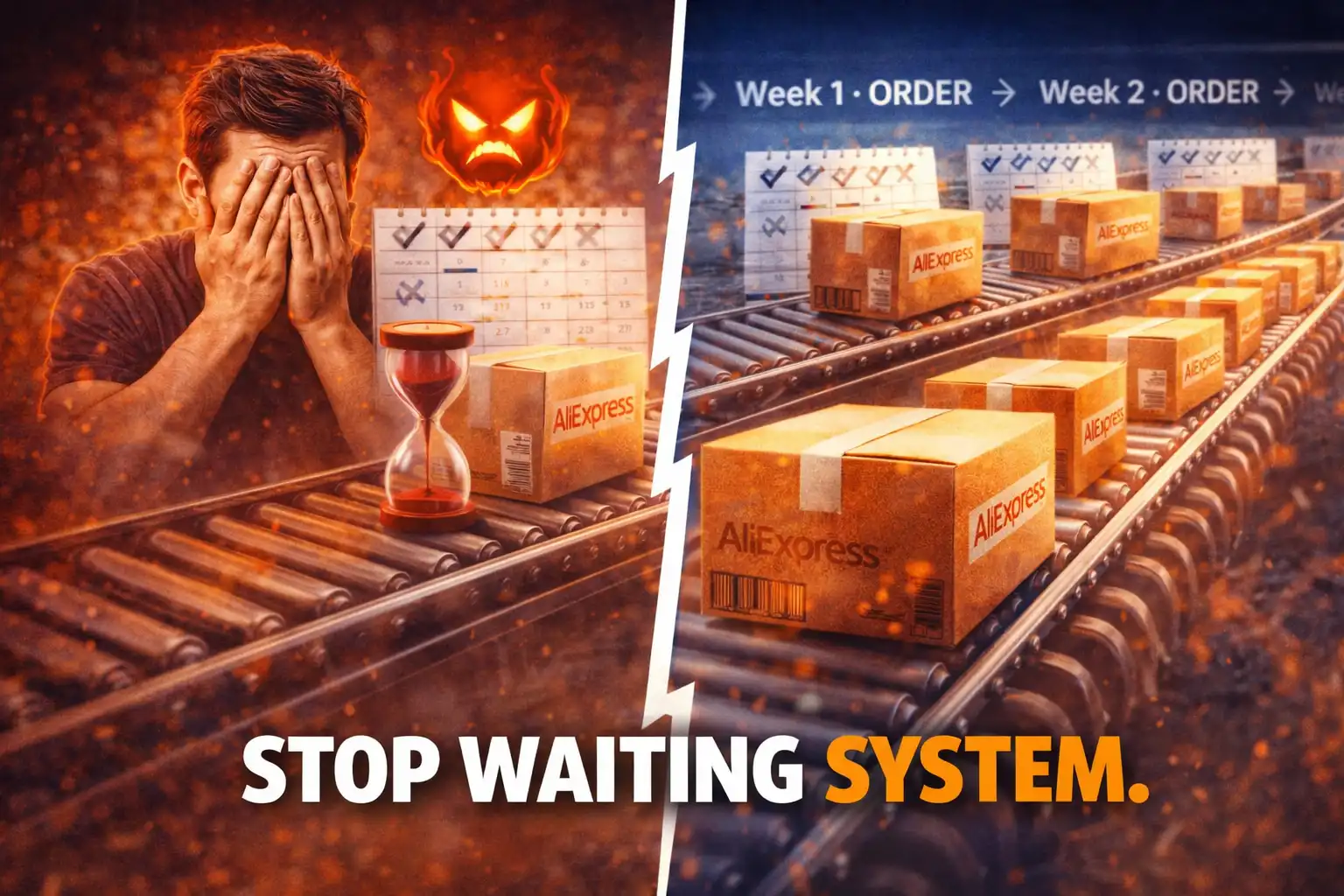
Let’s assume average delivery time = 30 days.
Most beginners do:
- Order → wait 30 days → order again
That creates gaps.
Now compare with this:
- Week 1 → Order
- Week 2 → Order
- Week 3 → Order
- Week 4 → Order
Now something interesting happens:
Week 5 → first order arrives
Week 6 → second order arrives
Week 7 → third order arrives
👉 You’ve created a delivery rhythm
Why This Feels Completely Different
Because now:
- you’re not waiting
- you’re receiving
Your focus shifts from:
👉 “why is it late?”
to:
👉 “stock is coming regularly”
And that removes stress almost instantly.
A More Realistic Analogy (Business Level Thinking)
Imagine you run a small shop.
Would you:
- wait until your shelves are empty
- then order new stock
- then close the shop while waiting?
Of course not.
You would:
- reorder before running out
- keep buffer stock
- maintain supply flow
That’s exactly how AliExpress should be used.
The Concept Most Beginners Miss: Lead Time
There’s a term used in supply systems:
👉 lead time
This is the time between ordering and receiving.
AliExpress has a long lead time.
And here’s the key:
👉 long lead time is NOT a problem
👉 unmanaged lead time is the problem
Why Economy Shipping Still Works Perfectly
Many people think:
“I need faster shipping to avoid delays”
Not always.
If your system is correct, you can use:
👉 economy shipping (30–35 days)
And still never feel delayed.
Because:
- you already planned ahead
- you already have stock
- your next shipment is already coming
So speed becomes optional, not essential.
When Express Shipping Actually Makes Sense
There is a place for fast shipping.
Use it when:
- machine breakdown
- urgent replacement
- time-critical situation
In these cases:
👉 you are buying time, not product
So higher cost is justified.
The Dangerous Habit That Causes All Stress
Let’s be honest.
Most people only order when:
👉 they already need the item
That creates:
- urgency
- pressure
- emotional decision-making
And that’s where AliExpress feels “bad”.
The System That Removes Stress Completely
Here’s the exact framework you can follow:
- never let stock reach zero
- always reorder before it feels urgent
- use weekly or periodic ordering
- treat shipping time as normal delay
- build buffer stock
Once this system runs:
👉 delays stop being a problem
👉 tracking stops being stressful
👉 experience becomes stable
A Deeper Insight That Most People Realize Too Late
AliExpress is not slow.
It’s just:
👉 not designed for reactive buyers
It rewards:
- planning
- patience
- system thinking
If you approach it casually, it feels chaotic.
If you approach it strategically, it becomes powerful.
One More Layer That Builds Confidence
When you repeat this system for a few cycles, something changes:
- you stop checking tracking constantly
- you stop worrying about delays
- you trust the flow
Because now you understand:
👉 the system is predictable over time, not per order
If you want to see how other buyers structure their sourcing and avoid these problems entirely, you can explore patterns here:
Final Thought
Most people say:
“AliExpress shipping is too slow.”
But the real question is:
👉 are you using it like a buyer…
👉 or like someone who understands supply systems?
Because those two approaches create completely different experiences.
Let me ask you this
Are you still waiting for one package at a time…
Or are you ready to build a system where packages arrive continuously without stress?