
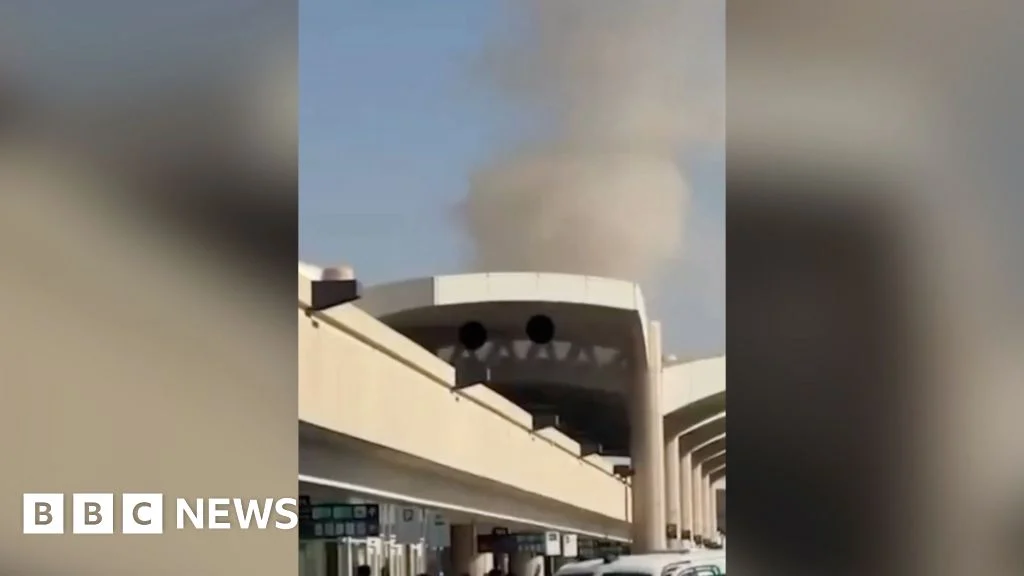
International concern has escalated sharply following a second consecutive day of projectile strikes targeting the primary international aviation hub in Saudi Arabia’s capital. Officials reported that a new attack on King Khalid International Airport in Riyadh resulted in one fatality and left 11 individuals injured, compounding a crisis that has sharply heightened regional tensions.
Successive Airport Attacks Shake Riyadh
The latest incident occurred on Sunday, when a projectile struck the airport facility and ignited a fire within one of its passenger halls, according to a Saudi military spokesman. In an official statement shared on the platform X, the Saudi civil aviation authority confirmed that a Pakistani resident lost their life in the strike. Major General Turki al-Maliki, spokesperson for the Saudi-led military coalition, stated that air defences had successfully intercepted a separate missile near the airport while emergency personnel responded to the blaze inside Passenger Hall No. 4.
This development immediately followed a far deadlier strike on the same infrastructure. The previous day’s attack on the capital’s international airport claimed 13 lives and injured 308 people. According to the Saudi civil aviation authority, the casualties from Saturday included four Saudi nationals, two individuals from Bangladesh, and one person each from the United States, Jordan, Palestine, Syria, Sudan, and Egypt. Additionally, the Indian embassy confirmed that an Indian national succumbed to injuries sustained during the weekend violence.
Houthi Claims and Broader Regional Threats
Responsibility for the persistent barrage was claimed by the Houthi movement in Yemen. Military spokesman Brigadier General Yahya Saree announced that the group had targeted the facility using a combination of ballistic missiles, cruise missiles, and drones over a 24-hour period. The group also claimed attacks on Dammam airport and nearby oil facilities in eastern Saudi Arabia.
In the wake of these actions, Houthi leadership issued warnings advising airlines and passengers to avoid Saudi airspace and airports entirely. The military spokesman vowed that operations deep inside Saudi territory would continue to escalate, designating all domestic airports as potential targets with the exception of those located in the holy cities of Mecca and Medina. The Houthis maintain that their military campaign is a direct response to Saudi Arabia’s continued backing of government forces in Yemen’s civil war, as well as an alleged air strike on the airport in Sanaa.
International Reactions and Diplomatic Implications
The escalation has drawn swift condemnation from global leaders. United States President Donald Trump indicated that Washington would make a decision and act quickly regarding a potential response against the Houthis, while U.S. Secretary of State Marco Rubio confirmed the death of an American citizen in the strikes and condemned the aggression. In the United Kingdom, Defence Secretary Wes Streeting noted that London could potentially offer increased support to Riyadh, and Foreign Secretary Ed Miliband expressed deep shock over the attacks.
Amid growing security risks, the UK Foreign Office issued travel advisories discouraging visits to specific zones within Saudi Arabia, particularly regions situated within 10 kilometres of the Yemeni border. Concurrently, regional diplomacy faced new tests as Iranian Foreign Minister Abbas Araghchi communicated his country’s readiness to assist in facilitating dialogue between Riyadh and the Houthi administration, even as the fragile security situation on the ground continues to deteriorate following the collapse of the 2022 ceasefire.