
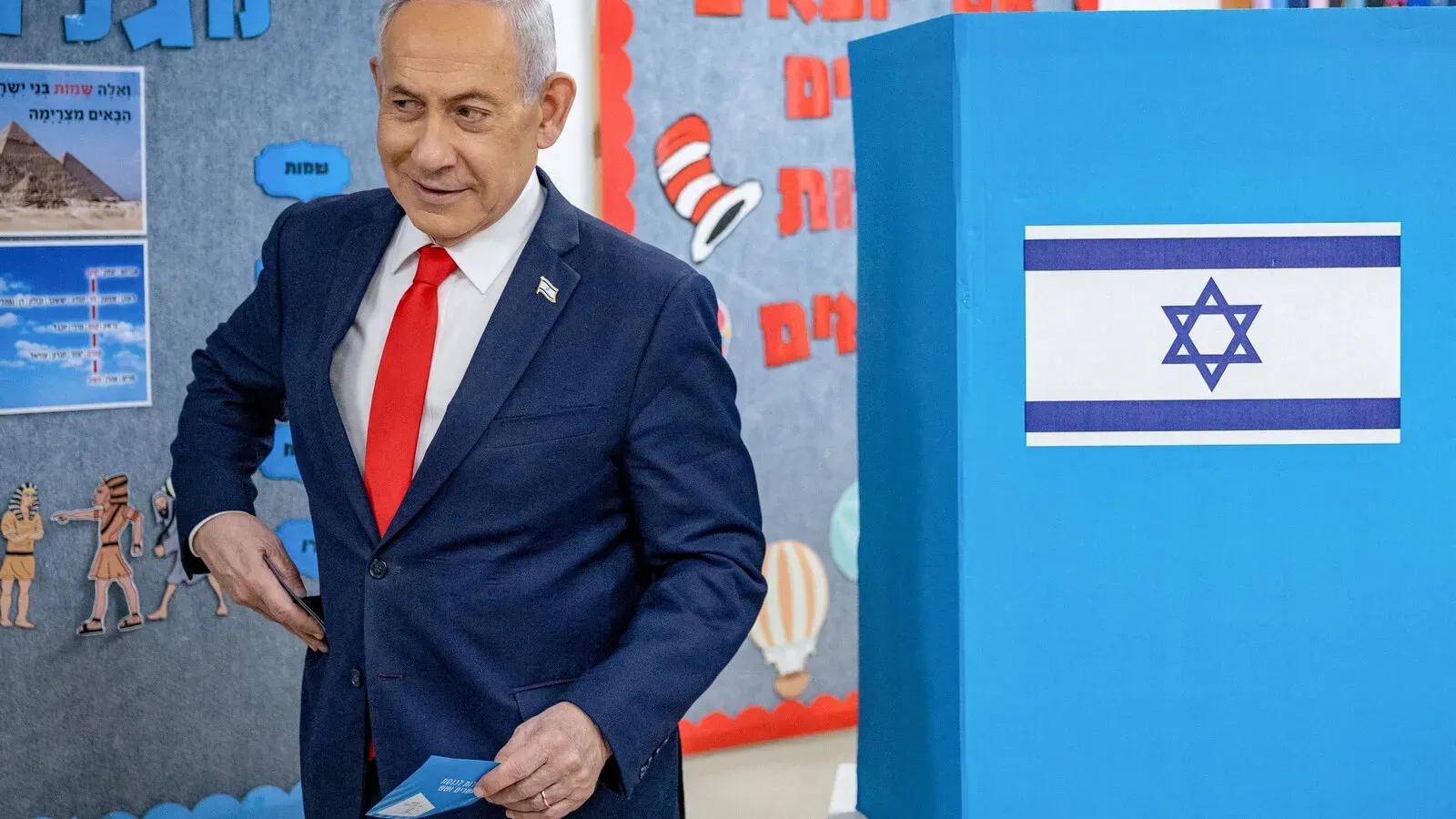
Voters across Israel headed to the polls in unprecedented numbers on Tuesday, marking what election officials and political analysts describe as one of the most consequential votes in the nation’s 78-year history. The general election represents the country’s first electoral test since the Hamas-led attacks of October 7, 2023, which upended domestic stability and sparked three years of continuous regional conflict.
According to live updates from the Central Elections Committee, public participation surged significantly compared to previous cycles. By 4 p.m. local time (10 a.m. Eastern) on Tuesday, six hours before polling stations were scheduled to close at 10 p.m., voter turnout had reached 55.7 percent. Officials confirmed that this figure marks the highest turnout recorded at that point in the day since the committee began tracking Election Day turnout in two-hour increments in 1973. Long queues formed early outside voting locations in cities such as Tel Aviv, Jerusalem, and mixed communities like Lod.
Further timeline tracking by election officials highlighted steady engagement throughout the day: turnout stood at 16.7 percent as of 10 a.m. (compared to 15.9 percent at the same point in the 2022 general election), rose to 31.5 percent by 12 p.m. (the highest by that time of day since the 1970s), and reached 44.9 percent as of 2 p.m. local time (six percentage points more than at the same point in the 2022 election). Additional updates were published at 10:20 a.m., 10:49 a.m., 11:15 a.m., 11:32 a.m., 11:46 a.m., 11:50 a.m., and 11:56 a.m. ET as the high-stakes contest unfolded.
The ballot pits the country’s longest-serving leader, Prime Minister Benjamin Netanyahu, against a fractious opposition bloc loosely spearheaded by Gadi Eisenkot, a former military chief of staff and leader of the Yashar party. Netanyahu, leading a far-right coalition of nationalist and ultra-Orthodox factions, is campaigning to preserve his government’s trajectory. Meanwhile, opposition figures have rallied around platforms emphasizing accountability for security failures, domestic democratic safeguards, and repairing international relations.
High-Stakes Political Dynamics and Contenders
The political landscape leading up to Tuesday’s vote has been characterized by intense polarization. Netanyahu, heading the conservative Likud party, has framed the election as an essential defense of the nation’s security posture, warning supporters that the country could face grave risks without his leadership. Facing ongoing corruption trials, which he denies, the 77-year-old incumbent has navigated a turbulent campaign season defined by debates over judicial reforms, the handling of ongoing conflicts, and exemptions from mandatory military service for the ultra-Orthodox community.
Challenging the prime minister’s coalition, Gadi Eisenkot has emerged as the primary opposition figure. Eisenkot’s Yashar party has campaigned heavily on addressing pre-election vulnerabilities within the current administration, including demands for an independent inquiry into the events of October 7, 2023. Other prominent figures, such as former prime minister Naftali Bennett and former defense minister Avigdor Liberman, have also campaigned actively against Netanyahu while sharpening their focus on socioeconomic disparities and the integration of ultra-Orthodox citizens into national service.
The election also features significant participation from Arab citizens of Israel, who account for roughly 20 percent of the population. Historically characterized by lower participation rates, Arab communities experienced a sharp increase in mobilization driven by urgent local concerns, including a surge in violent crime and discriminatory housing policies. Pollsters noted that heightened engagement among Arab voters could substantially influence the final distribution of seats in the 120-seat Knesset.
Complex Coalition Building and Electoral Integrity
With polls projected to close at 10 p.m. on Tuesday night, election experts emphasize that immediate victory announcements are unlikely due to Israel’s complex proportional representation system. No single party has ever secured an outright majority in the Knesset, meaning that whichever bloc wins the most legislative seats must embark on exhaustive coalition-building negotiations. Under Israeli law, the president typically grants a designated party leader 28 days to forge a governing majority of at least 61 lawmakers.
Ahead of the closing hours, electoral authorities implemented stringent measures to secure the voting process against potential interference and disinformation. The Central Elections Committee deployed thousands of staff members equipped with body cameras to over 12,000 polling stations, while a joint desk with the domestic security agency Shin Bet actively monitored online platforms for false information. Acting director general Dean Livne assured the public that preliminary tallies from local stations would be made public swiftly, and the remote counting of roughly 600,000 ballots from military bases, embassies, and hospitals would be live-streamed for nearly 24 hours to ensure maximum transparency.
While official results are not expected until November 4, the record turnout highlights a deeply engaged electorate navigating a pivotal turning point in national governance, security policy, and civic life.