
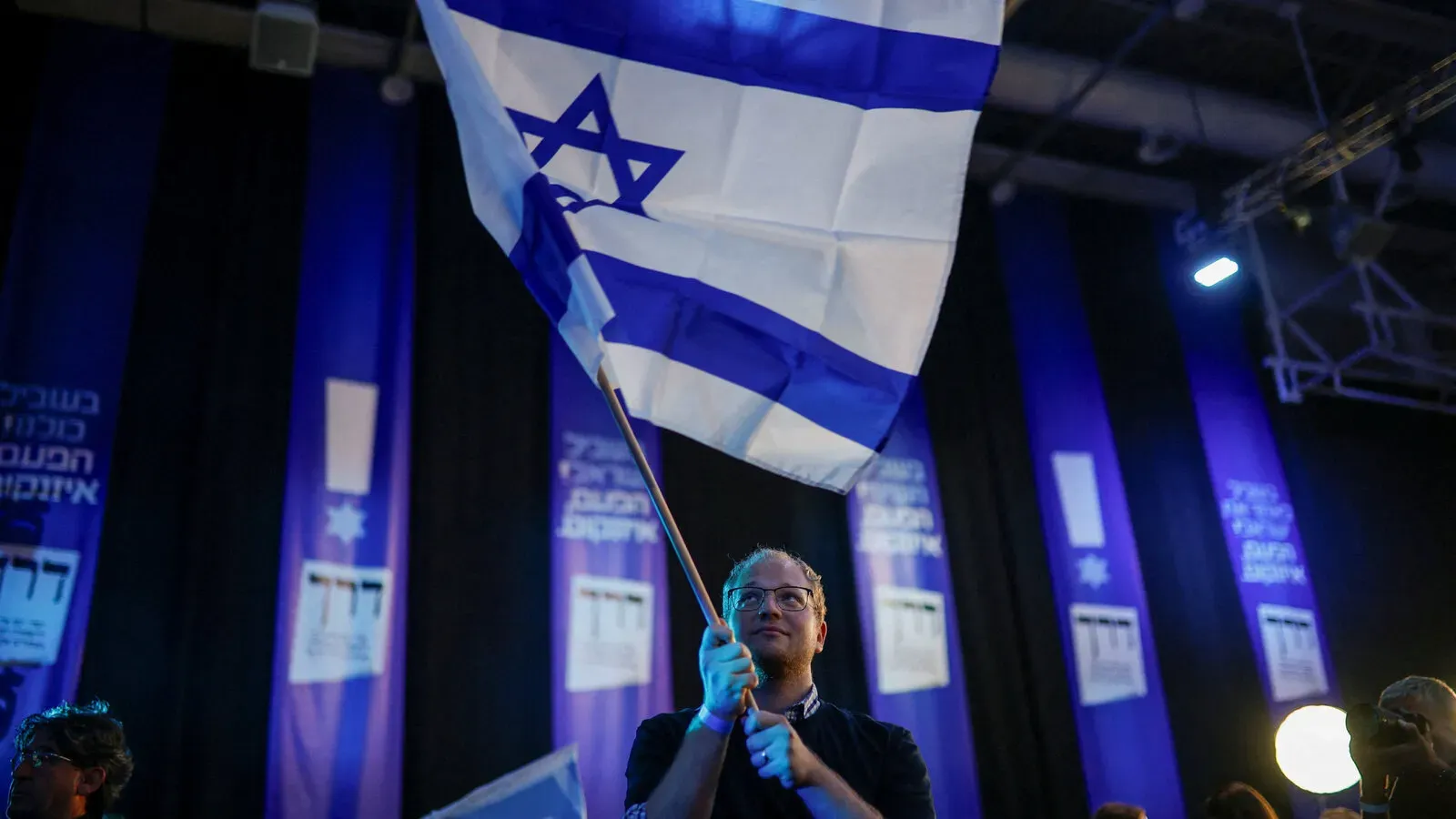
Voters in Israel turned out in their highest numbers in a generation on Tuesday, participating in a consequential parliamentary election that initial exit polls indicate has resulted in a tight race between Prime Minister Benjamin Netanyahu’s right-wing alliance and an opposition bloc led by former military chief Gadi Eisenkot.
With official vote counting underway and expected to continue for days, the preliminary data released by Israeli broadcasters reveals a deeply divided political landscape. Neither major political bloc secured an immediate parliamentary majority out of the 120-seat Knesset, pointing toward lengthy post-election negotiations and coalition-building efforts before any clear path to government emerges.
Record Turnout and a Historic Showing for Arab Parties
According to updates from the Central Election Committee, national voter turnout reached 77.7 percent, marking the highest participation rate recorded since 1999. Much of this surge was driven by record numbers of voters within Israel’s Arab communities, who represent approximately 20 percent of the country’s population.
Exit polls suggest that two primary Arab political factions—the socially conservative United Arab List (Raam) and the left-wing Joint List—are projected to win a combined total of 17 or 18 seats. This performance would mark the strongest parliamentary showing for Arab parties in Israel’s history, surpassing previous records where representation peaked at 15 seats.
Mansour Abbas, leader of the Raam party, spoke to television interviewers after the polls closed, stating that the high participation rate reflected a transformation of local frustration and despair into political hope. He emphasized that his immediate priority is ensuring an opportunity to replace the current government.
The Path to Coalition and Political Deadlock
Because neither Benjamin Netanyahu’s right-wing bloc nor Gadi Eisenkot’s centrist-led alliance achieved an outright majority on their own, the newly expanded Arab parliamentary factions could emerge as critical kingmakers in the legislative math. However, forming a governing coalition involving Arab parties remains politically complicated, as several Jewish opposition leaders have set strict conditions—such as requiring potential partners to formally designate Hamas as a terrorist organization—that have not been met.
Political analysts are also examining alternative configurations, including the possibility of a unity government combining right-wing and centrist elements. Yet, major obstacles stand in the way of such an alliance, given the deep political animosity toward the incumbent prime minister among opposition voters, alongside disagreements over executive leadership.
Meanwhile, Prime Minister Netanyahu’s Likud party experienced a notable late surge, projecting an estimated 24 seats in exit polls—more than any individual rival party. However, these additional seats appeared to draw support from within his existing right-wing alliance rather than expanding the bloc’s overall parliamentary reach.
Next Steps and Special Ballots
The definitive outcome will remain uncertain until all paper ballots are manually counted and verified across more than 12,000 polling stations nationwide. Election authorities estimate that roughly 600,000 additional votes—accounting for approximately 10 percent of eligible participants—were cast at special locations including military bases, hospitals, prisons, and foreign embassies. In previous cycles, these specialized ballots have tended to favor Mr. Netanyahu’s coalition.
Once final results are certified and seats are formally allocated, Israel’s President Isaac Herzog will formally invite the party leader deemed most capable of assembling a governing coalition of at least 61 lawmakers to take the reins.