
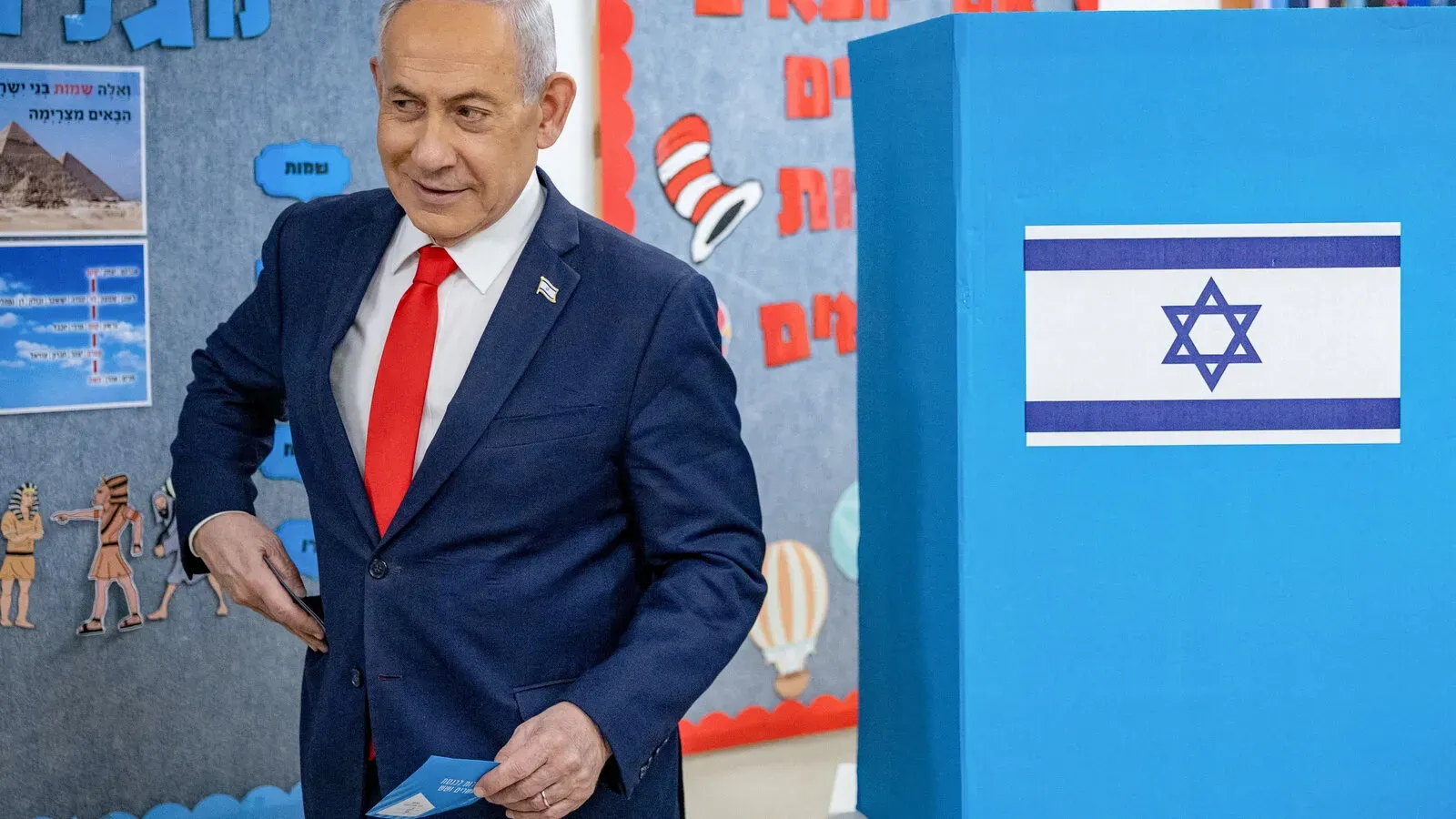
Israel Votes in Consequential Parliamentary Election
Voters across Israel headed to the polls in record numbers on Tuesday for what is widely considered one of the most critical parliamentary elections in the nation’s history. The legislative vote marks the first national election since the devastating Hamas-led attacks of October 7, 2023, which initiated nearly three years of ongoing conflict. Citizens faced a choice between sharply contrasting political visions for the country’s future.
Polling stations officially closed at 10 p.m. local time, though voters who were already in line at closing time were permitted to cast their ballots. Throughout the day, the Central Elections Committee reported exceptionally high engagement, noting that 74.3 percent of eligible voters had cast ballots by 8 p.m. local time—the highest rate recorded at that hour in decades, surpassing figures not seen since 1988.
Live Updates and Detailed Timeline of Polling Day
As election day unfolded on October 27, 2026, incremental turnout and developments were closely tracked throughout the day. At 10:20 a.m., reports emphasized that votes from Israel’s Arab citizens could help decide the election. By 10:49 a.m., voters in Tel Aviv expressed strong support for incumbent leadership. Further updates at 11:15 a.m. noted that more than 55 percent had voted as of 4 p.m. local time, the largest tally at that hour since the committee began tracking incremental turnout in the 1970s. Continued updates at 11:32 a.m. highlighted ultra-Orthodox neighborhoods in Jerusalem, while at 11:46 a.m., strong turnout was recorded in large Arab-majority towns such as Rahat and Nazareth.
As the day progressed, election authorities and volunteers monitored threats at 11:50 a.m., followed by statements from Benjamin Netanyahu’s Likud party at 12:21 p.m. regarding a request to extend voting hours. Further reporting at 12:41 p.m. detailed civil-society war rooms ensuring vote integrity, while analysis at 12:52 p.m. and 12:57 p.m. covered shifting congressional support in Washington and local voter perspectives in cities like Lod.
Key Political Blocs and Leadership Contenders
The electoral contest primarily pits Prime Minister Benjamin Netanyahu’s governing Likud party and its right-wing and ultra-Orthodox allies against an ideologically diverse coalition of opposition parties. The opposition bloc is loosely led by Gadi Eisenkot, a former military chief of staff and leader of the Yashar party whose own son was killed during the Gaza war.
Prime Minister Netanyahu, Israel’s longest-serving leader, is seeking a seventh term after tallying 19 years in power since first taking office in 1996. His current governing coalition holds the distinction of surviving a full four-year term, an achievement unmatched by any Israeli government in over thirty years. However, his administration’s tenure has been defined by significant polarization, an intense rightward shift, judicial overhaul efforts, and international isolation.
Conversely, opposition leaders headed by Mr. Eisenkot have campaigned on accountability regarding the security failures of October 7, pledging to repair Israel’s standing abroad and address extremist violence in the occupied West Bank. Initial exit polls published by major Israeli television networks indicated that neither side secured an outright majority, leaving the prospect of coalition-building negotiations ahead.
Turnout Dynamics and Controversies
A notable feature of the election cycle was the surge in participation among Arab citizens of Israel, who comprise roughly 20 percent of the population. Turnout in several Arab-majority towns exceeded figures from the previous election held in November 2022. Early afternoon data showed turnout in the Bedouin town of Rahat reaching 60 percent by late afternoon.
The high participation rates sparked sharp rhetoric during the final hours of the campaign. Prime Minister Netanyahu publicly accused Arab citizens of attempting to “steal the elections,” deploying language that drew criticism and accusations of race-baiting. Concurrently, right-wing ministers announced plans to deploy thousands of observers to polling stations in Arab communities under the banner of ensuring voting integrity, which critics characterized as an attempt at voter suppression.
Election officials confirmed that despite heightened political tensions and extensive security preparations involving civil society watchdogs and domestic security agencies, voting proceeded without reports of widespread irregularities or fraud. With ballots counted by hand at over 12,000 polling locations before being transferred to regional hubs for electronic tabulation, final certified results are anticipated to take days.