
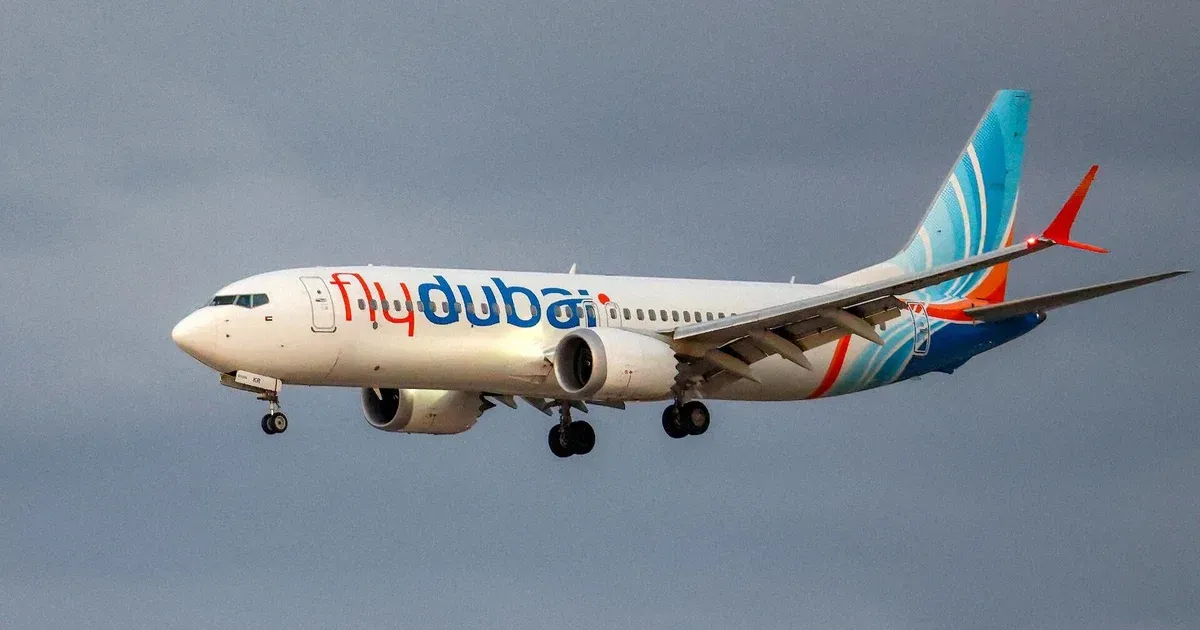
A violent mid-air crisis aboard a commercial passenger flight bound for Israel was narrowly averted after crew members and passengers subdued a co-pilot who allegedly stabbed the aircraft’s captain and tried to force the plane into a plunge. The FlyDubai flight, carrying 174 people from Dubai to Tel Aviv, was forced to make an emergency landing in Tabuk, Saudi Arabia, following the altercation in the cockpit.
The harrowing incident unfolded as the aircraft was making its approach toward Israeli airspace. International authorities are now trying to piece together the identity, motives, and background of the unidentified airman, whose custody has quickly become a matter of high-level diplomatic coordination in the Middle East.
High-Altitude Chaos and the Emergency Landing in Tabuk
According to accounts provided by Israeli officials and flight details, the crisis erupted when the co-pilot launched a sudden knife attack against the captain inside the cockpit. Rather than stabilizing the aircraft, witnesses indicated the attacker attempted to tamper with and jam the plane’s flight equipment in an effort to crash the jetliner.
Despite sustaining knife wounds, the captain managed to resist the assault long enough to unlock the cockpit door. The disruption allowed passengers and cabin crew to intervene. A group of passengers successfully overpowered the struggling co-pilot, who reportedly shouted for someone to kill him once he was restrained.
With the primary pilot wounded and the suspect subdued, control of the aircraft fell to two off-duty pilots who happened to be traveling on the flight. The off-duty aviators took command of the controls and safely navigated the plane to an emergency touchdown at an airport in Tabuk, Saudi Arabia.
None of the passengers aboard suffered serious physical injuries during the confrontation or the emergency landing. However, the captain required medical treatment for stab wounds, and Saudi officials confirmed that two crew members were hospitalized with unspecified injuries following the ordeal.
Custody Shift and the Suspect’s Background
Following the emergency landing in Tabuk, Saudi Arabian authorities initially took the suspect into custody and began preliminary questioning. However, diplomatic arrangements moved rapidly across the region. A senior Israeli official stated that United Arab Emirates President Mohamed bin Zayed Al Nahyan informed Israeli Prime Minister Benjamin Netanyahu that Saudi Arabia was expected to hand over the suspect to Emirati jurisdiction.
By Thursday afternoon, Saudi Arabian officials confirmed that the co-pilot had been formally transferred to the UAE to face further interrogation. Because FlyDubai is a carrier based in Dubai, the transfer aligns the investigation with the airline’s home flag state.
Official confirmation regarding the suspect’s identity remains tightly controlled. Authorities have not publicly released his name. However, an Omani official confirmed that the attacker was born in Oman and holds Omani citizenship, though the government in Muscat has not issued a formal public declaration confirming his legal nationality.
Conflicting Assessments Over Motive and Radicalization
While regional security agencies continue their joint probing into the attack, political leaders and intelligence officials have presented varying assessments regarding why the co-pilot attempted to crash the aircraft.
Israeli Prime Minister Benjamin Netanyahu initially characterized the early witness reports as resembling a “suicide attempt,” citing the suspect’s actions to jam controls and his shouting after being subdued. However, in subsequent public statements, Netanyahu cited preliminary evidence gathered during initial interrogations, asserting that personal information indicated the suspect had undergone “Islamist radical indoctrination.” Netanyahu did not clarify whether this information was derived from Saudi or Israeli questioning, nor did he provide specific background files.
Other official statements took an even firmer stance:
- Israeli Defense Minister Israel Katz publicly labeled the event “an attempted jihadist terror attack” and referred to the co-pilot as a “terrorist.”
- Israeli Security Officials told reporting outlets that investigators are evaluating whether the incident was intended as a September 11-style suicide hijacking and are investigating if the airman acted entirely alone or had external assistance.
- U.S. President Donald Trump publicly posited a potential connection to regional state actors, stating Thursday that “based on what I’m hearing,” the suspect might be linked to Iran, adding that American authorities were actively evaluating intelligence.
Netanyahu took a more cautious approach regarding potential foreign state links, stating on television interviews that it was “too early to say” whether Iran played any role in directing or facilitating the attack. The event comes during a period of heightened security alerts throughout the region, with Israel engaged in ongoing military operations against Iran-aligned groups, including Hamas in the Gaza Strip and Hezbollah in Lebanon.
Aviation Safety Questions Remain
The ability of a commercial airline co-pilot to smuggle a bladed weapon past airport security screening and launch a violent takeover attempt in mid-flight raises pressing operational questions for international aviation regulators. A key focus for investigators in the UAE will be determining how the weapon entered the secure cockpit area and whether pre-flight mental health screenings or security Vetting overlooked warning signs of radicalization.
For now, aviation experts credit the immediate physical intervention of the flight captain, cabin crew, alert passengers, and the fortunate presence of off-duty pilots for preventing what could have been a catastrophic mass-casualty incident over the Mediterranean corridor.