
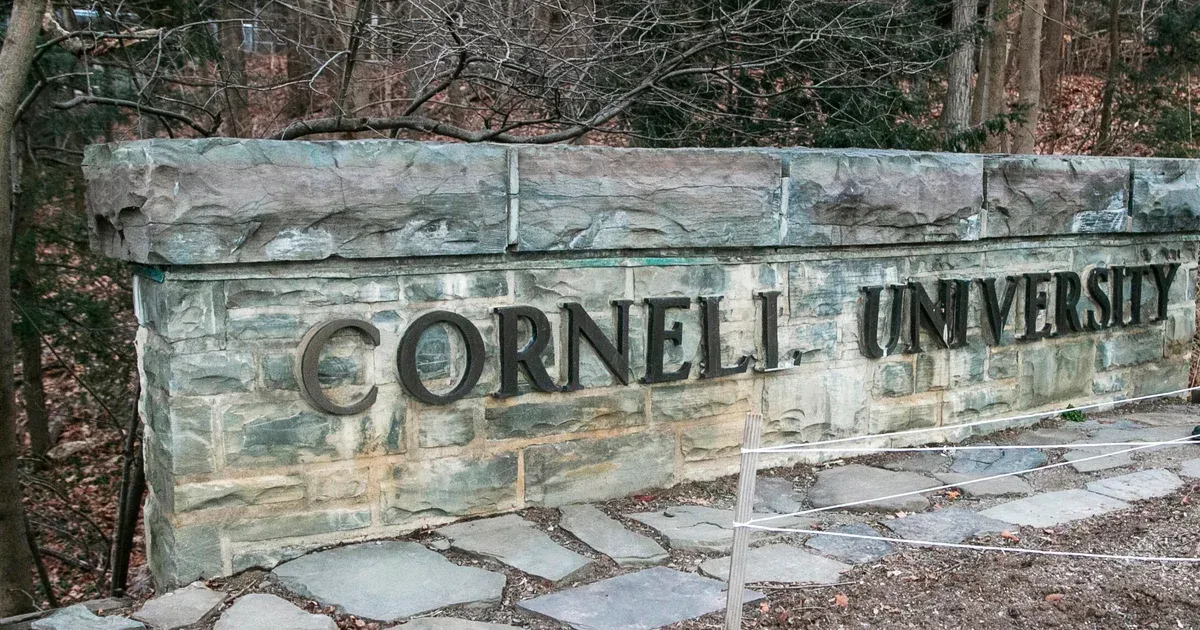
Newly disclosed records from the 2024 investigation into an alleged fraternity gang rape at Cornell University have brought critical details to light regarding law enforcement’s initial handling of the case. Uncovered interview transcripts show that while the alleged victim described memory lapses related to substance use, she explicitly told campus investigators she was certain a sexual assault occurred later that night.
The release of these records coincides with a decision by local prosecutors to reopen the criminal investigation into the matter. While Cornell University had previously conducted an administrative probe resulting in student expulsions, suspensions, and institutional sanctions, the law enforcement response faced renewed public and legal scrutiny.
Inside the Campus Police Interview
According to interview records obtained by investigative reporters, questioning of the alleged victim—referred to as Jane Doe—began on November 14, 2024, more than three weeks after the alleged assault took place. The recorded session stretched across two days, conducted primarily by a campus police investigator.
During the first session, several individuals were present alongside the primary investigator, including a Title IX investigator, a victim advocate, and Jane Doe’s personal adviser. Transcripts document that Jane Doe acknowledged consuming alcohol and drugs on the night in question, resulting in memory gaps regarding specific timeframes.
In her testimony, Jane Doe distinguished between the early interactions of the evening and the events that unfolded later. When questioned about the initial encounter, she noted:
“Yeah, as much as I can be because, again, I was super drunk when I got there … But I was pretty OK with all of this.”
She further stated that physical violence began during this period, explaining that she was “being hit at the same time. Physically hit very, very hard.” However, when recounting the subsequent events of the night, Jane Doe expressed absolute certainty regarding the nature of the assault, stating:
“I can say with 100% confidence I was raped.”
Documentation Process and Prosecutorial Review
The transcripts outline a systematic process where the lead campus investigator typed Jane Doe’s verbal statements line by line, reading the text back word for word to allow for real-time corrections and clarifications. On the second day of questioning, Jane Doe reviewed a finalized six-page statement alongside her adviser.
When asked by her adviser whether additional editorial review was required before finalizing the document, Jane Doe affirmed her agreement with the text, stating, “I’m very confident about this,” prior to signing.
The Tompkins County District Attorney later confirmed that this signed 2024 written statement formed the central basis for the original decision not to file formal criminal charges at the time. While reporters have reviewed the questioning transcript, the finalized six-page document signed by Jane Doe has not been made public.
Legal Perspectives and Continuing Inquiries
The reopening of the criminal case highlights opposing positions held by the involved parties. Legal representation for Jane Doe previously noted that their client experienced severe denial in the immediate aftermath of the alleged violence, a factor that often complicates early law enforcement interviews in trauma cases.
Conversely, legal counsel representing two defendants named in civil proceedings connected to the case maintain that their clients completely deny all wrongdoing and accusations of assault. Neither Cornell University nor Jane Doe’s primary attorney issued fresh statements immediately following the transcript’s release.
With prosecutors actively re-examining the case file, the newly revealed transcript provides a clearer baseline of what was communicated to campus police during the early stages of the investigation, setting the stage for ongoing criminal reviews.