
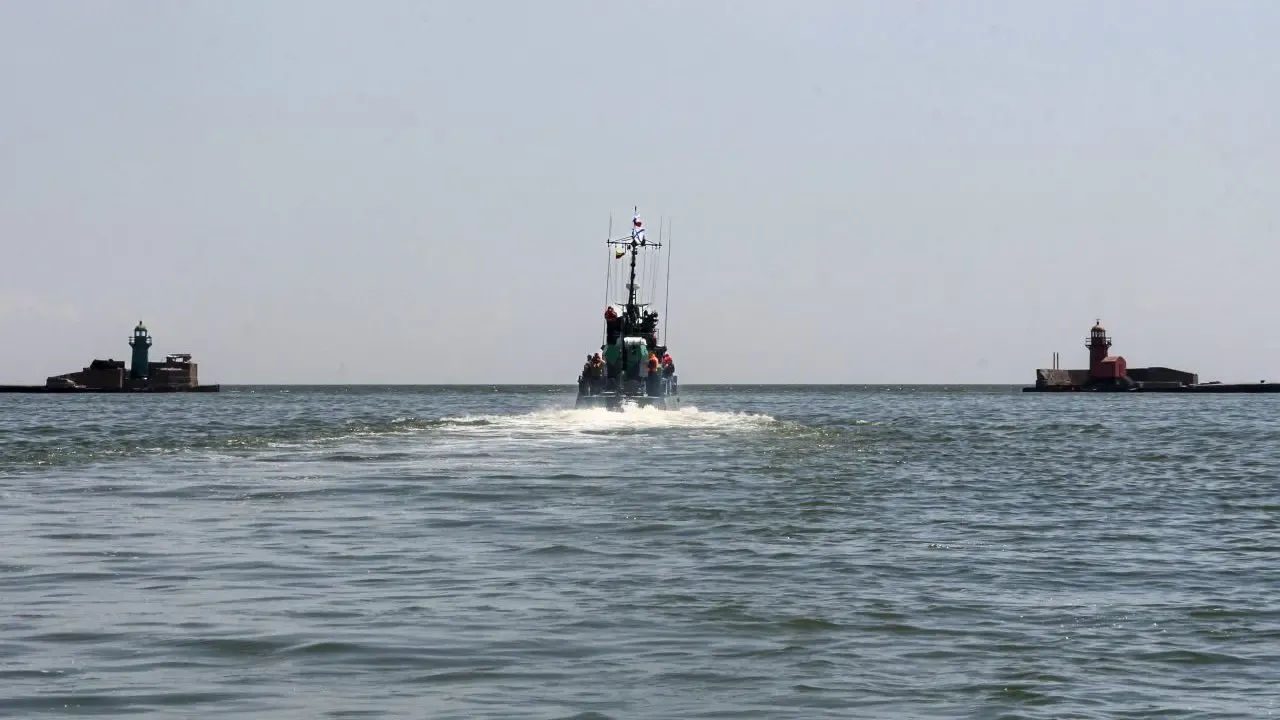
A severe escalation in Black Sea hostilities reached inside NATO maritime boundaries on Tuesday after a coordinated strike combining aerial and surface drones targeted two commercial vessels off the coast of Bulgaria. The attack resulted in the catastrophic sinking of one cargo ship, leaving its crew missing, while setting a second merchant vessel ablaze in international shipping lanes. The dual strikes occurred approximately 70 nautical miles off the eastern Bulgarian town of Byala, directly within the nation’s exclusive economic zone (EEZ).
The violent disruption in sovereign NATO-adjacent waters prompted swift condemnation from regional leaders and coincided with an urgent security alert from Ukrainian President Volodymyr Zelenskyy. Citing updated intelligence, Zelenskyy publicly blamed Russian forces for the maritime assault and warned that Moscow was positioning its military assets for a much broader, imminent strike against Ukrainian infrastructure and civilian targets.
Dual Strikes Target Commercial Cargo Vessels Inside Bulgarian EEZ
According to reports from British maritime risk management group Vanguard, the first target hit was the cargo vessel Alfa Watan. The vessel sustained devastating structural damage before submerging with an undisclosed cargo and an unknown number of crew members on board. A nearby Bulgarian ferry, the Dioscuria, altered its course toward the scene after witnessing an explosion and receiving distress signals. Emergency responders aboard the ferry discovered a floating debris field containing life jackets, empty life rafts, and an overturned lifeboat, but found no immediate trace of the missing crew.
A multi-agency search-and-rescue operation was launched immediately, involving the Bulgarian Navy, Air Force, and Border Police. While rescue units scoured the area for survivors, officials also began monitoring the surrounding waters for potential environmental hazards resulting from the ship’s fuel and submerged cargo.
At approximately the same time, a second commercial vessel—the general cargo ship ABLE—was struck while carrying a shipment of grain. The vessel, which had departed a Ukrainian port the previous day, caught fire immediately upon impact. The crew of a Bulgarian ferry successfully evacuated all 18 seafarers from the burning ship, including 11 Turkish nationals and seven Indian nationals. Two crew members who suffered severe injuries were airlifted to a medical center in Varna, while the remaining 16 mariners were brought safely to shore.
Technical Analysis Points to Combined Air and Maritime Drone Tactics
Maritime security analysts and military tech specialists highlighted the high degree of operational coordination required to carry out simultaneous precision strikes against vessels moving in opposite directions. Cameron Chell, founder of drone manufacturer Draganfly, noted that the physical impact needed to sink a commercial ship quickly points to a hybrid attack mechanism involving both aerial and surface platforms.
Chell explained that aerial loitering munitions, such as the Geran-4 drone, typically dive at steep angles during their terminal attack phase, which makes them less effective on their own at piercing a vessel at the waterline. To inflict catastrophic hull breaches capable of rapidly sinking a heavy vessel, surface attack craft—such as the Maran maritime drone—are often deployed to strike directly at water level.
Experts warn that introducing combined air and sea drone tactics to commercial shipping lanes inside a NATO member’s exclusive economic zone represents a calculating shift in strategy. By targeting grain carriers and merchant traffic, the orchestrators aim to create systemic fear among commercial shipping operators, effectively turning critical Black Sea trade corridors into high-risk transit zones similar to the security crises seen in Middle Eastern maritime chokepoints.
Political Fallout and Broader Security Warnings Across Europe
In the wake of the strikes, Bulgarian Prime Minister Rumen Radev convened an emergency government meeting to assess the national security implications. Radev characterized the drone attack inside Bulgaria’s exclusive economic zone as a flagrant breach of international law. While noting that investigations were still underway to formally confirm the origin of the drones, he warned that the unchecked expansion of hostilities risks drawing neighboring nations into a wider regional or global conflict.
President Zelenskyy confirmed that Ukrainian naval authorities had communicated directly with their Bulgarian counterparts to analyze the telemetry and nature of the strikes. Zelenskyy asserted that joint intelligence verified the use of Russian aerial and sea drones targeting civilian maritime traffic.
Shortly after addressing the Black Sea incidents, Zelenskyy issued a wider warning via social media, advising citizens and international allies that intelligence services had uncovered preparations for an impending large-scale Russian missile attack. He called upon Western partners—particularly the United States and European nations—to show political will by immediately delivering additional air defense capabilities to shield critical infrastructure.
Surging Risk to Black Sea Maritime Commerce
The attack off the Bulgarian coast highlights a dramatic rise in commercial shipping disruptions throughout the region. According to figures compiled by British maritime risk consultancy Ambrey, over 210 individual strikes on commercial vessels were recorded in the Black Sea between July and late September alone. The strike in Bulgarian waters follows another fatal incident off Romania’s coast just a day earlier, where a shipboard fire caused by military action resulted in two fatalities.
As search-and-rescue teams continue their efforts off Byala, the destruction of merchant shipping within NATO’s economic domain underscores how rapidly the Black Sea maritime domain is deteriorating, posing direct threats to global supply chains, international crews, and regional security.