
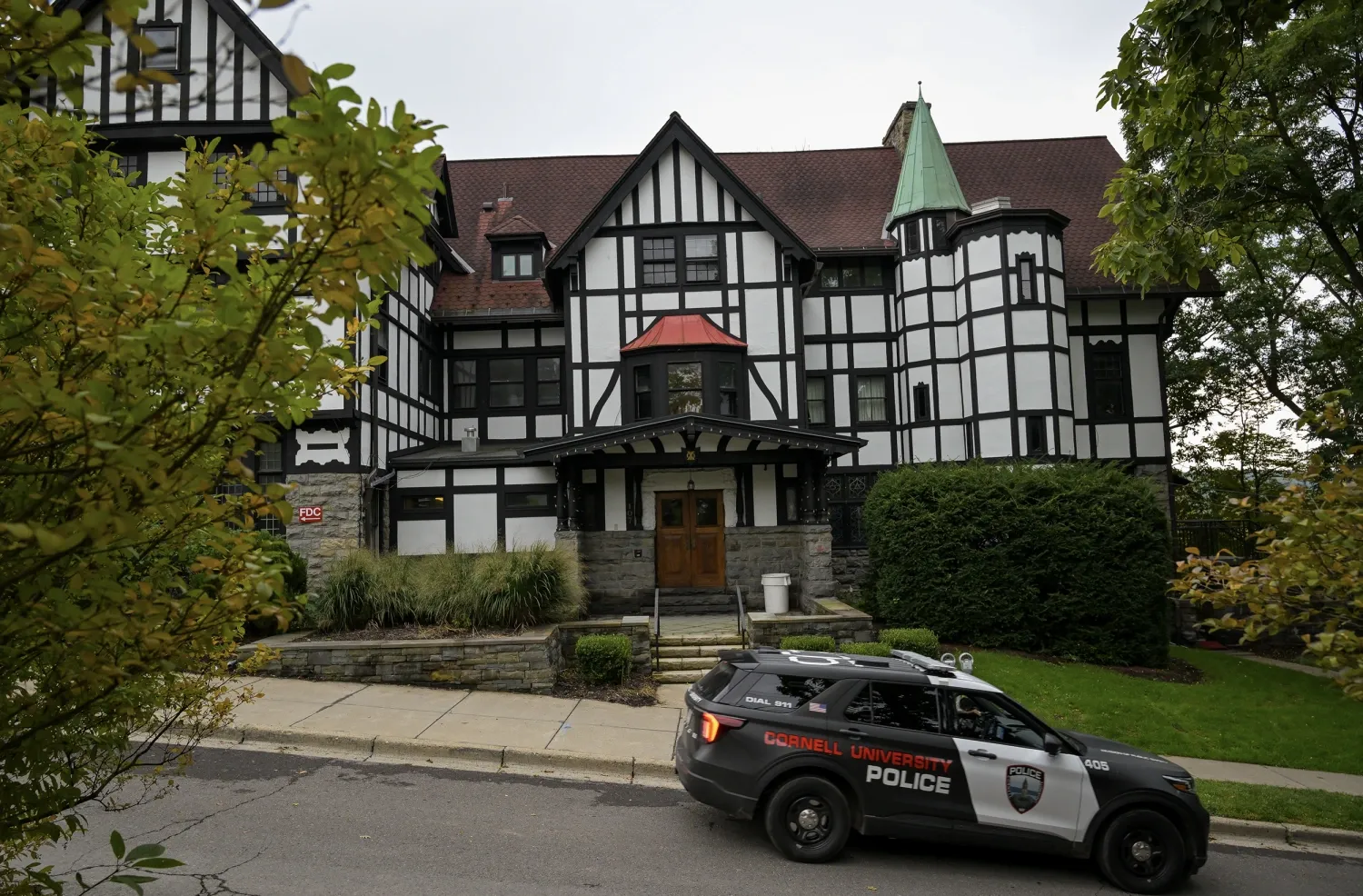
Newly disclosed police records reveal that local prosecutors in Tompkins County, New York, declined to pursue criminal charges following an alleged gang rape at a Cornell University fraternity house without reviewing witness interviews, anonymous tips, or digital evidence gathered during the early stages of the investigation.
Tompkins County District Attorney Matthew Van Houten confirmed that his office based its decision not to file charges entirely on an initial six-page statement provided by the 20-year-old accuser, identified as Jane Doe. The decision has sparked widespread scrutiny regarding how law enforcement and prosecutorial authorities handle campus sexual assault allegations, prompting state officials to intervene.
Timeline of the Allegations and the Initial Inquiry
The allegations stem from an event occurring between October 19 and October 20, 2024, at the Chi Phi fraternity house near the Cornell University campus. Jane Doe reported that she was sexually assaulted over several hours by multiple men while under the influence of alcohol, marijuana, and ketamine. Last month, Jane Doe filed a civil lawsuit against Cornell University and seven members of the Chi Phi fraternity connected to the incident.
According to documentation from the Cornell University Police Department (CUPD), investigators launched an inquiry shortly after the report was made, speaking with several potential witnesses and collecting tips. However, on November 25, 2024—roughly five weeks into the police investigation—a campus police investigator met with the District Attorney’s office to discuss the case status.
Records indicate that an investigator within the District Attorney’s office stated that prosecutors had reviewed Jane Doe’s preliminary statement and unanimously agreed that criminal charges would not be pursued. Van Houten maintained that the initial statement did not describe criminal conduct, pointing out that the accuser indicated parts of the evening were initially consensual before escalating into assault.
Unexamined Witness Statements and Digital Evidence
Internal police logs demonstrate that while campus officers documented witness accounts and received anonymous phone tips, those materials were never evaluated by the District Attorney’s team. When questioned about the omission, Van Houten stated there was “nothing to review” regarding those specific police discussions because the fraternity members contacted by investigators had declined to speak on the advice of legal counsel.
However, police files show the scope of collected information extended beyond fraternity member statements. CUPD officers received fragments of a Snapchat conversation in which a group member posted a message referencing sexual access in the fraternity house’s alumni room, where Jane Doe stated an initial consensual interaction occurred before non-consensual acts took place.
To follow up on the digital trail, campus police submitted a formal data request to Snapchat on November 26, 2024. On December 23, 2024, Snapchat provided CUPD with 1,665 data items retrieved from five separate accounts. A CUPD investigator reviewed the records and noted that only three messages mentioned Jane Doe or the incident, concluding none appeared criminal in nature. Despite this collection of digital records, Van Houten indicated his office was not involved in reviewing the Snapchat data, citing that original fragments had come directly from a witness rather than law enforcement subpoenas at the time his office made its initial determination.
Notification Delays and State-Level Intervention
Beyond the lack of evidence review, the handling of communication with the victim has raised serious concerns. Although prosecutors reached their determination on November 25, 2024, Jane Doe was not informed that the case was closed until January 21, 2025—nearly two months later. Van Houten clarified that his office played no role in notifying the accuser, as his staff had never interviewed Jane Doe directly.
Thomas Giuffra, the attorney representing Jane Doe, expressed frustration over the communication gap, noting that his client believed the investigation was actively ongoing throughout December and January. Giuffra characterized the two-month delay as a significant failure in institutional communication and procedural fairness.
The controversy surrounding the handling of the case led New York Governor Kathy Hochul to step in. Governor Hochul announced the appointment of New York Attorney General Letitia James as special prosecutor to re-examine the case in its entirety and determine whether criminal charges are warranted.
Addressing reporters during the announcement, Hochul openly criticized the initial prosecutorial process, questioning why a district attorney would reach a final decision without conducting direct interviews with the victim or witnesses, or requesting complete investigative records from campus police. While Van Houten initially offered to reopen his own review, authority over the matter has now been formally shifted to the state attorney general’s office.
If you or someone you know has been affected by sexual assault, confidential support is available 24/7 through the National Sexual Assault Hotline at 1-800-656-4673 or online at rainn.org.