Many experienced AliExpress buyers eventually notice something unusual when shopping on the platform. At first everything seems normal: you carefully choose a product with strong reviews, maybe a 4.8 or 4.9 rating, thousands of orders, and positive feedback.
But when the package finally arrives and you look closely at the label, invoice, or product packaging, something feels different.
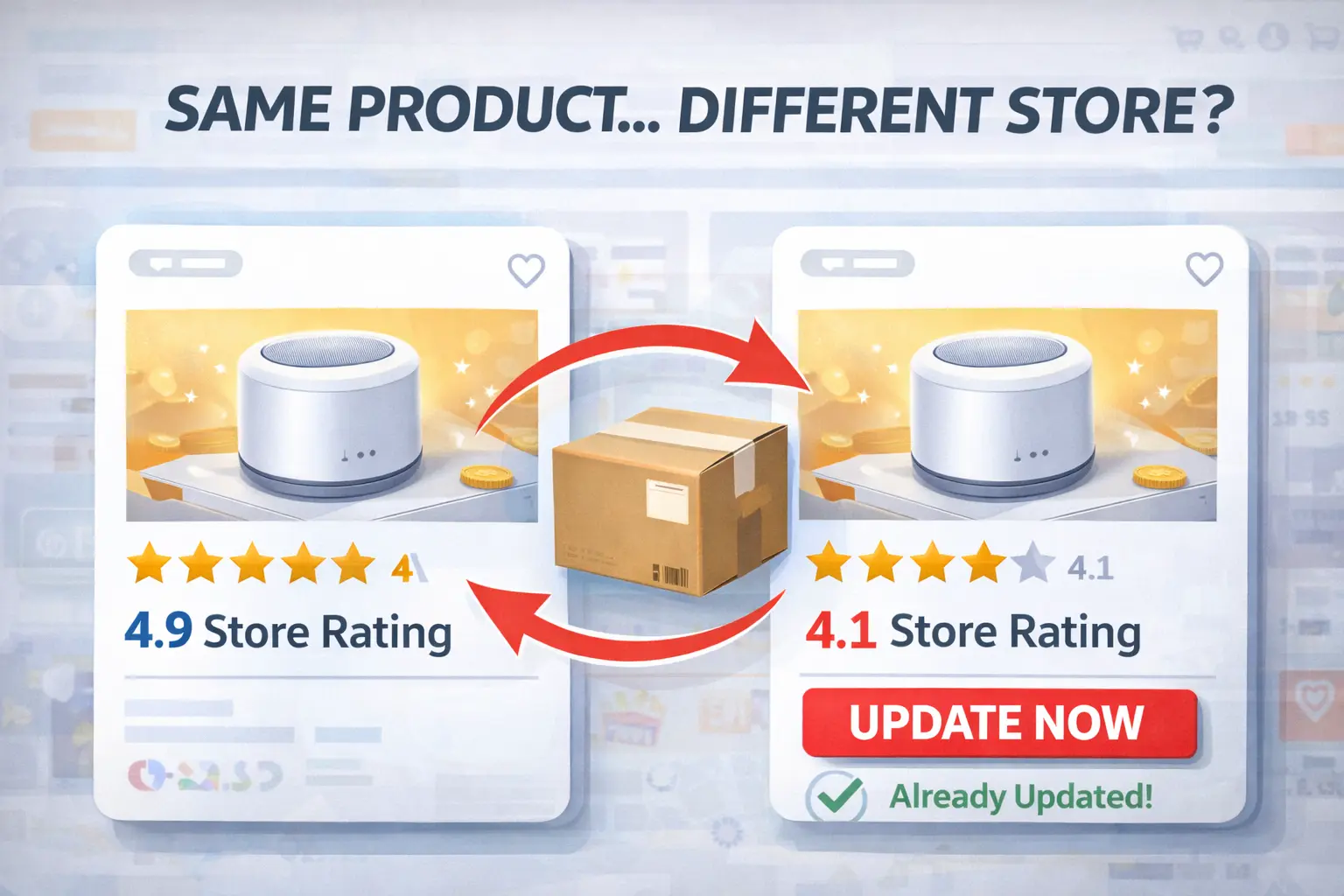
Instead of clearly coming from the store where you bought it, the product sometimes appears connected to another store with a lower rating.
This can leave buyers wondering: Did the seller redirect the order? Are multiple stores connected somehow?
Let’s explore what might actually be happening.
When a High-Rated Listing Leads to a Different Store
Imagine this situation.
You carefully select a product that looks trustworthy:
- Store rating: 4.9 stars
- Many positive reviews
- High order volume
Everything suggests the seller is reliable.
However, after receiving the item and examining the packaging or shipping label, you notice a different store name — sometimes one that has a noticeably lower rating, such as 4.1 stars.
Naturally, this raises questions.
Did the seller secretly switch the source of the product?
Are multiple stores connected behind the scenes?
The Marketplace Model Behind AliExpress
To understand why this happens, it helps to know how large marketplaces operate.
AliExpress is not a traditional retailer. It is a platform connecting buyers with independent sellers. Many sellers operate more like distributors than manufacturers.
Because of this, multiple stores can sell the exact same product.
In fact, it is very common for one product to appear in dozens of different stores at the same time.
Sometimes those stores even source the product from the same supplier or warehouse.
Why the Shipping Label May Show Another Store
There are several practical reasons why a product may appear to come from a different store than the one listed on the marketplace page.
One common reason is shared supply chains.
Some sellers do not keep their own inventory. Instead, they rely on a supplier who ships the product directly to the buyer.
This system is often called supplier fulfillment.
In that situation, the store where you placed the order acts more like a storefront, while the actual shipment may come from the supplier’s logistics network.
That supplier might also sell the same product through multiple other stores on the platform.
Why Multiple Stores Sell the Same Item
Large marketplaces encourage competition between sellers.
That means the same product may appear under many different listings.
For example:
| Store Type | What They Do |
|---|---|
| Main supplier store | Original seller or distributor |
| Reseller store | Lists the same product with different pricing |
| Marketing-focused store | Focuses on branding and high ratings |
Sometimes sellers even operate multiple storefronts with different marketing strategies.
One store may focus on premium branding and customer service, while another may operate as a lower-cost outlet.
Why Ratings Can Look Different
Product ratings are tied to each individual listing, not necessarily to the supplier behind the product.
This means two stores selling the same item can show very different ratings depending on:
- customer service quality
- shipping speed
- communication with buyers
- how disputes were handled
So even if the physical product is identical, the customer experience can influence the rating significantly.
When Buyers Feel Something Is Off
Although the explanation may be logistical, it can still feel confusing to buyers.
After carefully selecting a highly rated listing, discovering a different store name on the package may create the impression that something misleading happened.
This is one of the challenges of global marketplaces where supply chains and storefronts are often separate systems.
How Experienced Buyers Handle This
Frequent AliExpress shoppers usually focus on a few important details before purchasing:
- seller communication responsiveness
- detailed customer reviews with photos
- order history of the listing
- dispute resolution reputation
Many buyers also check whether the same product appears in multiple stores to understand how widely it is distributed.
Learning From Marketplace Trends
International online shopping is evolving quickly. As platforms grow larger, supply chains become more complex and sometimes less transparent to buyers.
This is why many shoppers prefer researching trending gadgets and reliable products before making purchases.
If you’re interested in exploring useful gadgets and trending everyday products that global buyers are currently discovering, you can browse curated insights here:
Understanding what other buyers are purchasing can often help avoid confusion.
Is This a Problem or Just How Marketplaces Work?
In many cases, the appearance of multiple stores selling the same product is simply part of how large marketplaces operate.
Different storefronts may share the same suppliers, logistics networks, or warehouses.
However, it is still understandable that buyers may feel confused when the store name on the package does not match the store where the order was placed.
Understanding this marketplace structure can help shoppers navigate the platform with more confidence.
Have You Ever Noticed This?
Have you ever purchased a product from a highly rated store and later discovered that the package seemed to come from another store with a lower rating?
Do you think this is just part of marketplace logistics, or should platforms make these supply chains more transparent?
Your experience might help other buyers understand how global online marketplaces really work.