
For many buyers, one of the most interesting parts of shopping on AliExpress is the ability to communicate directly with sellers. Unlike many traditional online stores, the platform allows buyers to message sellers before or after placing an order. In many cases, sellers are surprisingly responsive and helpful.
However, not every conversation leads to a clear answer.
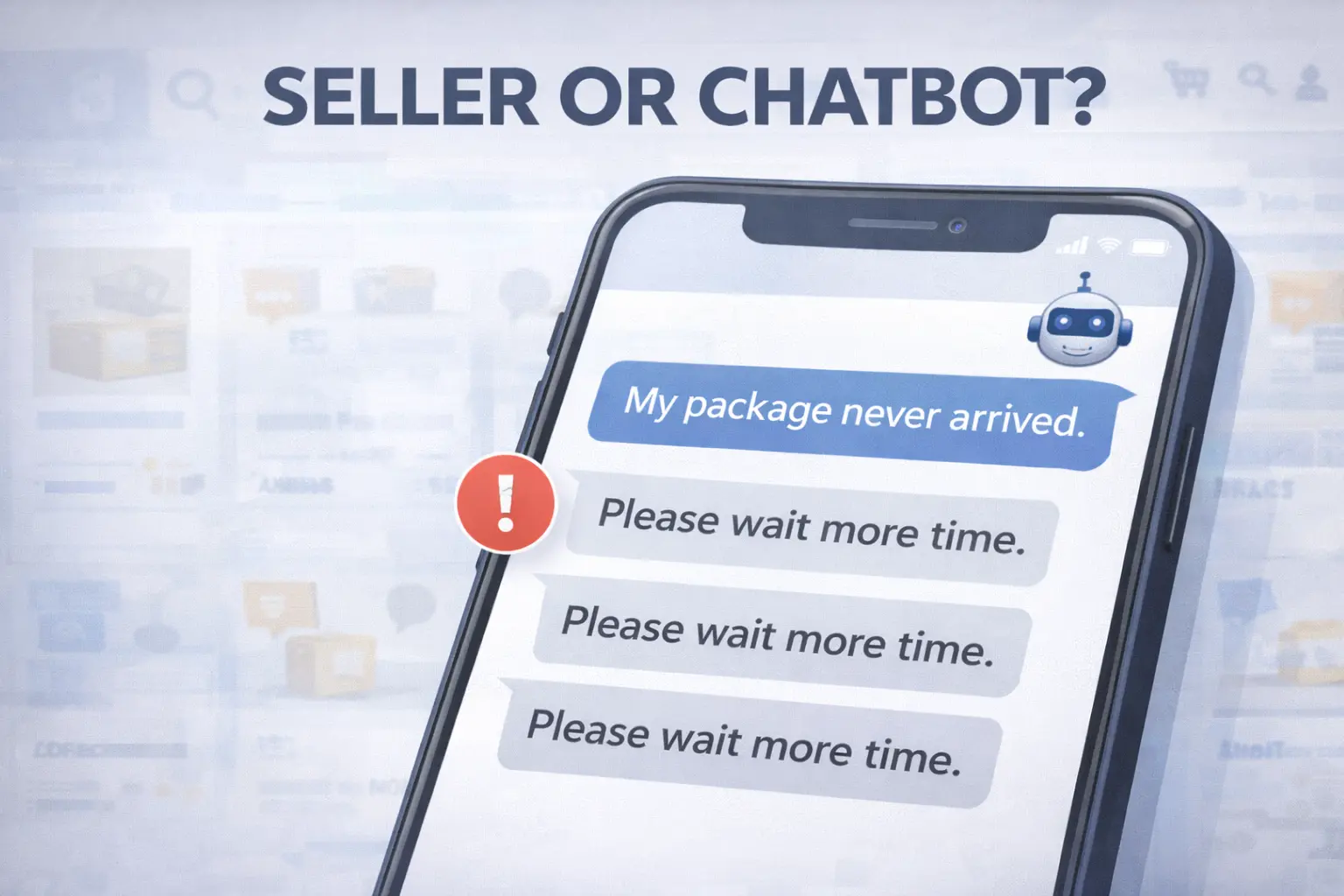
Some buyers report that when an order goes missing or a package never arrives, communication with the seller suddenly becomes much more difficult. Instead of receiving a clear explanation, the responses may feel repetitive, automated, or unrelated to the actual problem.
This leads many shoppers to suspect that some sellers rely heavily on chatbots or automated reply systems.
When the Conversation Feels Like Talking to a Robot
At first, communication with a seller may seem normal. A buyer asks a question about shipping, delivery time, or product details, and the seller responds politely.
But when a problem appears — such as a package not being delivered — the conversation sometimes changes.
Buyers may start receiving messages like:
- “Please wait more time.”
- “Logistics is in transit.”
- “Please contact logistics company.”
These replies can appear repeatedly, even when the buyer asks more specific questions.
After a few rounds of this, the conversation may start to feel less like customer service and more like an automated script.
Why Some Sellers Use Chatbots
There is a practical reason behind this.
Many sellers on AliExpress handle hundreds or even thousands of orders at the same time. Responding manually to every message from every buyer would be extremely time-consuming.
To manage this volume, some sellers use automated messaging tools or chatbot systems that send pre-written responses to common questions.
These systems are designed to answer frequently asked questions such as:
- shipping time
- tracking information
- product availability
But when a situation becomes more complicated — like a lost package — automated replies may not be able to provide meaningful answers.
When Automation Becomes a Problem
Automation works well for simple questions, but it can become frustrating when buyers are dealing with real problems.
Imagine calling a support line and hearing the same recorded message no matter what question you ask. Even if the company wants to help, the automated system prevents a real conversation from happening.
This is often how buyers feel when messaging a seller about a missing order and receiving identical responses over and over again.
Why the Seller May Not Have the Answer
Another reason sellers sometimes struggle to provide clear answers is that they may not control the entire delivery process.
Once a package leaves the seller’s warehouse, it often travels through several logistics partners:
| Shipping Stage | Who Handles It |
|---|---|
| Seller dispatch | Seller logistics |
| International transport | Freight carrier |
| Import processing | Customs or sorting centers |
| Final delivery | Local postal service |
Because several companies are involved, the seller might only see the same tracking information that the buyer sees.
So even if the seller wants to help, they may not have detailed information about the package location.
What Experienced Buyers Usually Do
Many experienced AliExpress shoppers take a slightly different approach when communication with the seller doesn’t resolve the issue.
Instead of relying entirely on seller messages, they often:
- monitor tracking updates closely
- open a dispute through the platform when the protection period is near expiration
- use external tracking websites to check shipment progress
These steps sometimes provide clearer information than a message conversation alone.
Learning From Other Buyers’ Experiences
International online shopping can be confusing, especially when communication barriers and automated systems are involved.
Many buyers prefer researching products and reading other shoppers’ experiences before placing orders. This helps them understand which sellers communicate clearly and which listings may lead to complications.
If you’re interested in exploring useful gadgets and trending everyday products that buyers around the world are currently discovering, you can browse curated insights here:
Learning from other buyers’ experiences often makes international shopping easier.
Friendly Sellers, But Imperfect Communication
Many AliExpress sellers are genuinely helpful and try to support buyers when issues appear. However, the combination of automated messaging tools, high order volumes, and complex international logistics can sometimes make communication feel frustrating.
When an order goes missing or delivery takes longer than expected, automated responses may not provide the clarity buyers are looking for.
Understanding how these systems work can help shoppers approach these situations more calmly and know when it might be better to rely on the platform’s dispute process instead.
What Has Your Experience Been?
Have you ever tried contacting a seller about a missing order and felt like you were talking to a chatbot instead of a real person?
Or have you had positive experiences with sellers who responded quickly and solved the problem?
Sharing these experiences can help other buyers know what to expect when shopping internationally.