
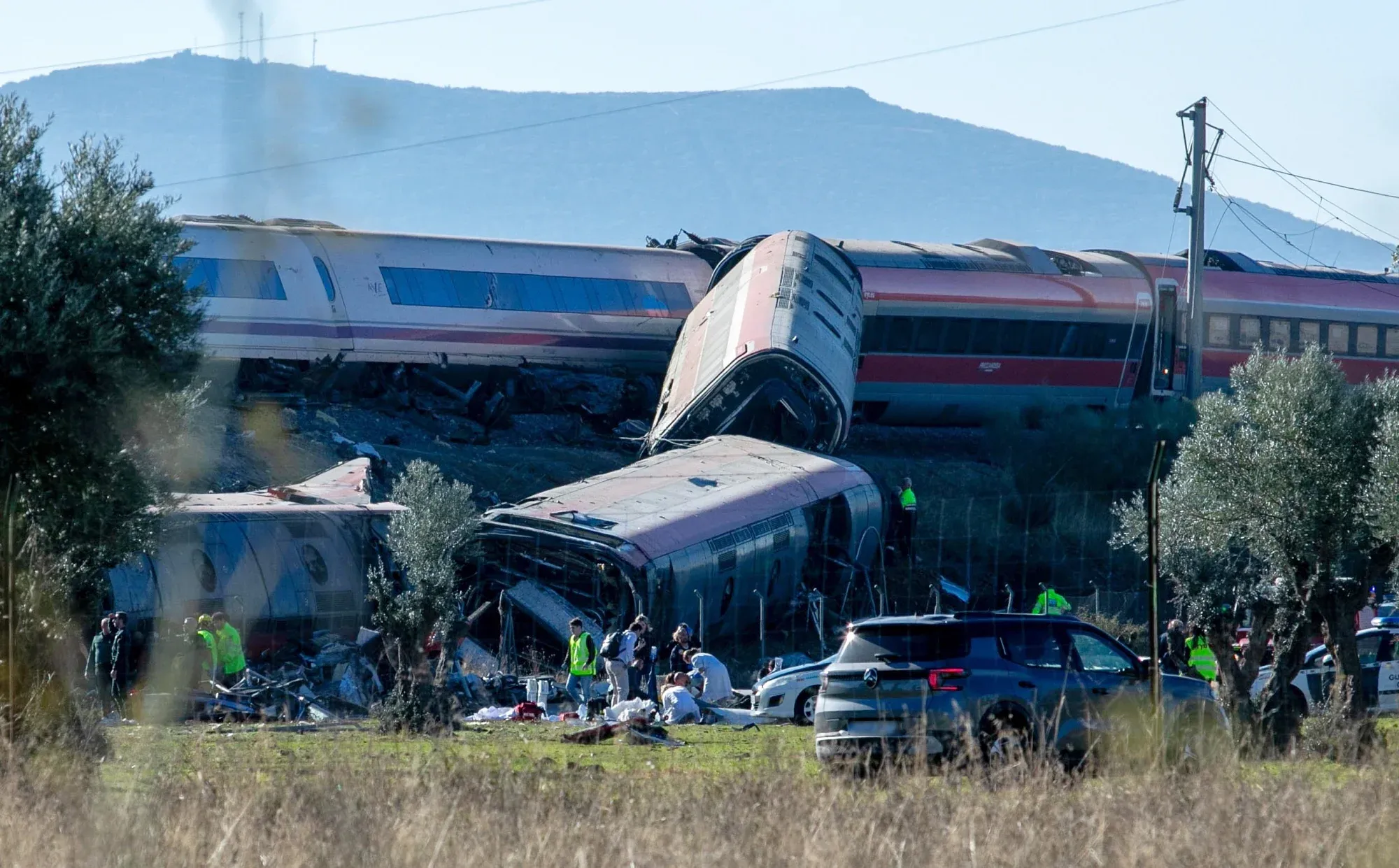
A catastrophic high-speed train collision in central Spain has claimed the lives of at least 68 people, marking one of the worst rail disasters in the country’s modern history. The tragedy unfolded on Wednesday morning in a rural area between the towns of Urda and Los Yébenes within the province of Toledo, as hundreds of passengers traveled from Madrid toward Seville.
The regional government for Castilla La Mancha confirmed the death toll alongside reports that 58 additional individuals required hospital treatment for various injuries. Emergency services, supported by a military emergency brigade, firefighters, and police, deployed ambulances and medical helicopters to the scene, while unscathed passengers were transferred onto buses. Prime Minister Pedro Sánchez canceled his upcoming agenda, and Spain’s King Felipe VI alongside Queen Letizia visited the crash site to express condolences.
Operational Timeline and Command Center Failure
Transport Minister Óscar Puente outlined the sequence of events leading up to the impact, stating that train engineers bore no responsibility for the accident. The crisis began at 8:30 a.m. when a computer malfunction disabled the security system across a 63-kilometer (39-mile) stretch of track, triggering automatic stops for all trains operating in the sector.
According to Puente, the central command center subsequently issued an order instructing a state-owned RENFE train carrying 397 passengers to resume movement without speed restrictions. Because an active stop signal remained on that section of the line, the train should have stayed stationary or proceeded only at a reduced speed. Traveling at speeds potentially reaching 200 kph (124 mph), the RENFE service collided at 8:53 a.m. with the rear of a stationary IRYO train carrying 147 passengers, which was owned by a private Italian-operated company.
Passenger Accounts and Rescue Efforts
The impact tore through carriages, scattering twisted metal and debris down a gravel slope surrounded by olive fields. Passengers on board described a sudden, violent deceleration followed by a forceful jolt that sent luggage, mobile phones, and occupants flying through the cabins.
Local witnesses and nearby workers rushed to assist before official rescue teams arrived, cutting through fences and utilizing personal first-aid kits to treat survivors trapped inside mangled cars. Health Minister Mónica García noted that rescue operations focused intensely on extracting survivors and bodies from the two most severely damaged carriages. Civil protection authorities in nearby Urda designated a local sports pavilion to receive incoming injured travelers.
Context Within Spain’s High-Speed Network
The collision represents Spain’s second major rail accident of the year, following a January crash in southern Spain involving trains from the same two companies that resulted in 46 fatalities. Prior to 2026, Spain’s dedicated high-speed rail lines—which opened in 1992 and span approximately 3,900 kilometers (2,400 miles)—had maintained a spotless safety record regarding fatal accidents, serving as a primary point of national pride.
Following the latest disaster, union representatives raised questions regarding the rapid liberalization and increased traffic density introduced after opening the network to private operators like IRYO in 2022. While investigations continue into the exact mechanics of the computer malfunction and command decisions, rail services between Madrid, Ciudad Real, and Andalusia remain suspended.