At first glance, AliExpress feels like a hidden gem. You can find unique accessories, aesthetic items, and small everyday products at prices that are hard to compete with. Many buyers start with low-risk purchases like trinkets, nails, or small fashion items—and often have a great experience. Some of these items even last for years, which builds trust in the platform.
But then something changes.
As buyers begin to explore larger or more expensive items, the experience becomes inconsistent. The same platform that delivered great value on small items suddenly feels unreliable. Quality doesn’t match expectations, shipping feels longer, and the risk starts to increase. This creates confusion, because it feels like the platform itself is inconsistent.
The truth is, nothing actually changed. What changed is the type of product—and how the system behaves around it. Once you understand that difference, you can control both quality and shipping experience much more effectively.
Where the experience starts to shift
There’s a pattern many buyers don’t notice at first.
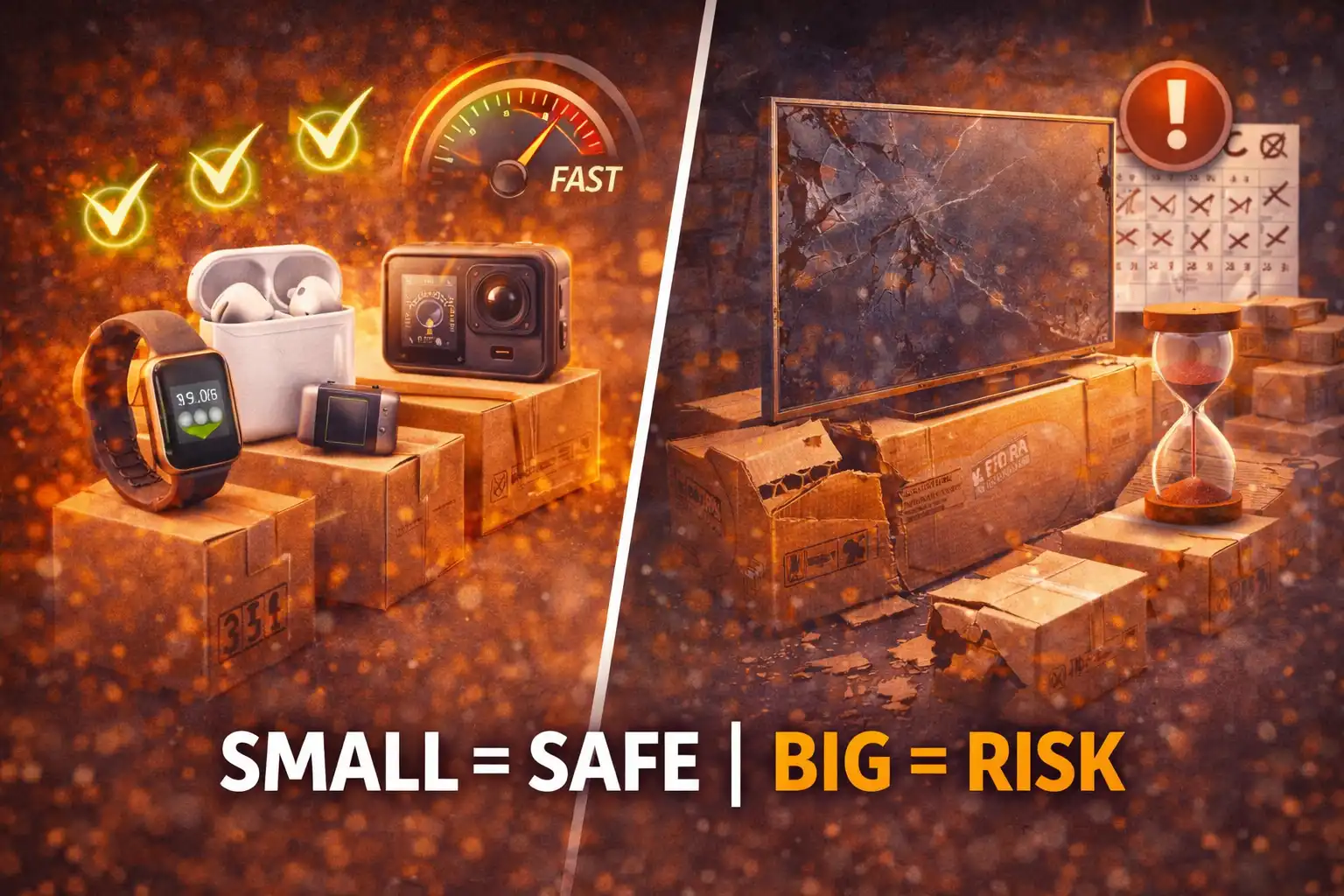
- small items → usually safe, low risk
- aesthetic products → often match expectations
- simple materials → less chance of failure
But when moving into:
- larger items
- complex products
- items with moving parts
👉 the margin for error increases significantly
This is not just about AliExpress. It’s about how global sourcing works. The more complex the product, the more variables involved in production, packaging, and shipping.
Why bigger items feel lower quality
This is where understanding the system matters.
Smaller items are easier to manufacture consistently. A desk mat, hair clip, or enamel pin has fewer failure points. Even if the material is not premium, it still functions as expected. That’s why these items often feel like “great value.”
But larger or more complex items introduce more variables:
- material quality becomes more noticeable
- assembly issues can appear
- packaging risk increases
- shipping damage becomes more likely
👉 This is why quality feels like it “drops” as you go bigger
It’s not always the seller trying to scam you. It’s often the nature of the product itself.
The part most people overlook: shipping behavior
Now let’s talk about shipping.
Many buyers accept that delivery takes 2–4 weeks, especially for destinations like the US. But what they don’t realize is that the frustration doesn’t come from the duration itself—it comes from how they manage that duration.
If you order one item and wait, those 2–4 weeks feel long.
If you structure your orders differently, the exact same shipping time can feel much shorter.
👉 This is where strategy comes in
When waiting becomes the real problem
The biggest mistake is simple:
- buying only when needed
- relying on one shipment
- expecting it to arrive “on time”
This creates pressure.
Because now:
👉 one delay = full frustration
But in international shipping, delays are normal. Packages move across multiple systems, and tracking is not always real-time. The system is not broken—you’re just depending on it incorrectly.
The shift that makes shipping feel faster
Instead of asking:
👉 “Why is this taking so long?”
Start asking:
👉 “How do I stop depending on one shipment?”
This is the exact mindset shift used by experienced buyers.
How to turn slow shipping into a steady flow
Here’s the strategy in a simple structure:
- place orders regularly (every few days or weekly)
- don’t wait for previous orders to arrive
- build overlapping shipments
- maintain small buffer stock
At first, it feels like nothing changes.
But after one full cycle:
- one package arrives
- then another follows
- then another
👉 suddenly, you’re receiving items regularly
Why this works even with 2–4 week delivery
Shipping speed doesn’t change.
What changes is the pattern.
Instead of:
❌ one package after 3 weeks
You get:
✔ packages arriving every few days (after the initial cycle)
👉 This is the key: frequency replaces speed
A simple way to reduce both risk and waiting
Combine this with a smart buying approach:
- prioritize simple, low-risk items
- test quality before scaling
- avoid large complex items unless verified
- split orders into smaller batches
This gives you two advantages:
- better quality control
- more consistent delivery flow
The strategy most long-term buyers quietly use
After some experience, buyers stop treating AliExpress as a one-time purchase platform.
They treat it as:
- a supplier system
- a repeating order cycle
- a controlled inventory flow
This is how they:
- avoid stress
- reduce risk
- maintain consistent supply
👉 and still keep costs low
If you want to explore product ideas and sourcing patterns that work well with this system:
When everything finally makes sense
AliExpress is not inconsistent.
It just behaves differently depending on:
- what you buy
- how you buy
- when you buy
Small items feel reliable because they have fewer variables. Shipping feels slow because you depend on one delivery. But once you adjust both product selection and ordering strategy, the experience becomes much more predictable.
A simple question to think about
Are you still testing random products and waiting for each one…
or are you starting to build a system where quality and delivery are both under control?