You pay for an item.
You wait weeks.
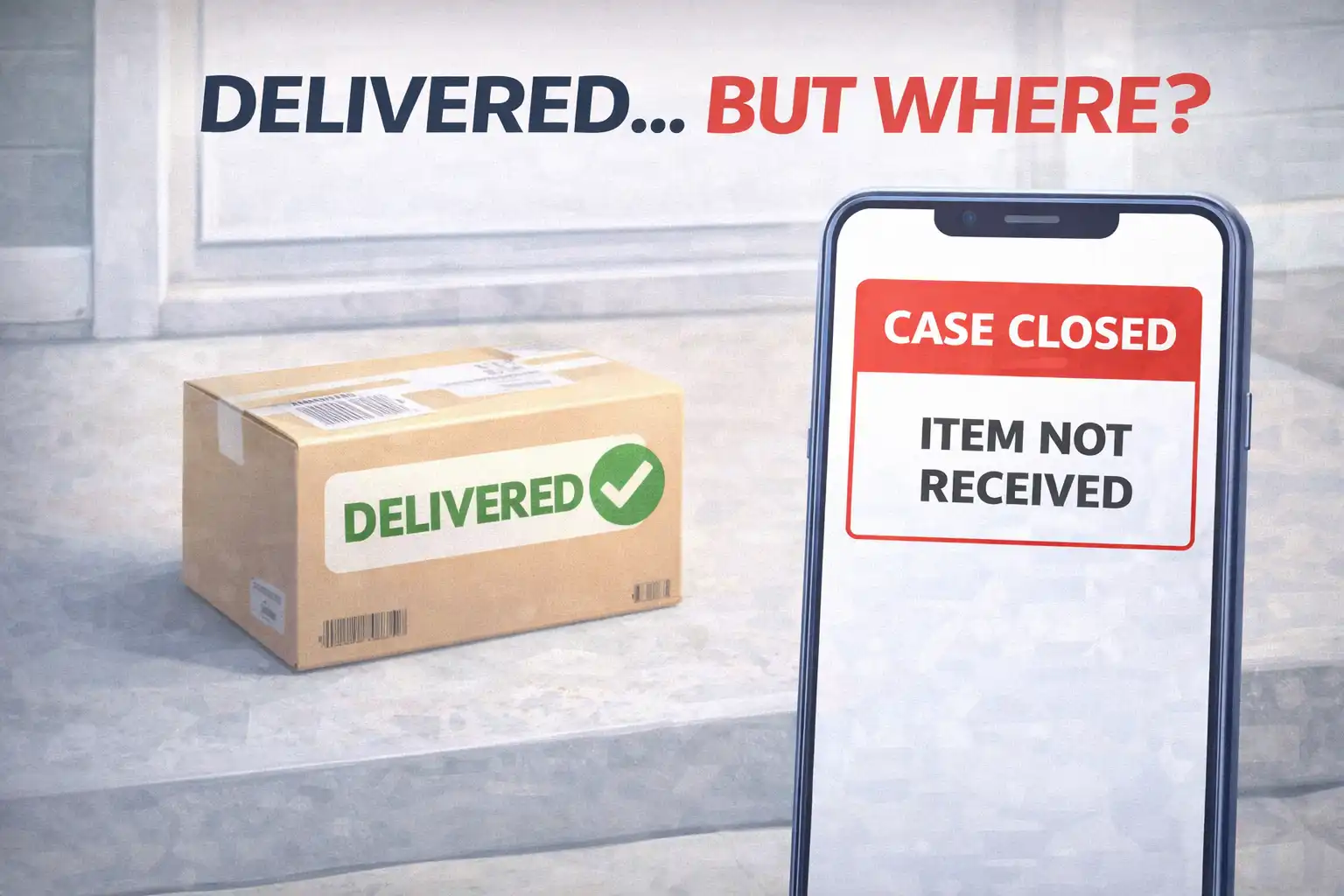
Tracking says: Delivered.
But nothing ever arrives.
No knock.
No parcel.
No signature.
No photo proof.
Just a status update that says the story is finished — even though, for you, it never even started.
This is where many buyers expect Buyer Protection to step in.
But sometimes… that’s where the real confusion begins.
When “Delivered” Becomes the End of the Story (Even If You Got Nothing)
In this case, the situation seems simple on the surface:
- Order value: €249.58
- Item never received
- Buyer present at delivery time
- Courier later confirms delivery was not properly completed
From a normal perspective, this looks straightforward:
No delivery → refund.
But that’s not how the system always processes it.
Because in large marketplaces like AliExpress, “delivery” is not defined by what you physically receive —
it’s defined by what the system believes happened.
And that difference is where most problems begin.
The Invisible System That Decides Everything
Let’s break something most buyers never see.
When you open a dispute, your case is not reviewed like a human conversation.
It’s processed more like a structured checklist system.
Something like this:
| System Checkpoint | What the Platform Looks For |
|---|---|
| Tracking status | Marked delivered or not |
| Proof of non-delivery | Strong, specific evidence |
| Seller response | Present or missing |
| Logistics confirmation | Matches required format or not |
Here’s the critical part:
👉 Even if something is true in reality,
👉 it must also be valid in system logic.
And those two are not always the same.
When Even Courier Confirmation Isn’t “Enough”
In your case, the courier’s senior management confirmed:
- the delivery was not properly completed
- the item was not handed over correctly
- you are not in possession of the goods
From a human perspective, this is decisive.
But inside the system, the question becomes:
Does this document match the exact format and wording required to override a “Delivered” status?
If the answer is no, the system may still treat the case as unresolved.
Why This Feels So Frustrating
Because from your side, everything is clear:
- you paid
- you didn’t receive the item
- the courier confirmed failure
But from the system’s side, it may look like:
- tracking says delivered
- evidence is “insufficiently structured”
- case becomes “complex”
This creates a disconnect that feels almost absurd.
Why You Keep Getting the Same Replies
This is where the experience starts to feel like:
talking… but not being heard.
Messages like:
- “We deeply apologize for the inconvenience”
- “Please be patient”
- “We are reviewing your case”
These are not necessarily bad intentions.
They are template responses triggered by workflow stages.
Think of it like this:
You’re trying to explain a real-world problem,
but the system is only allowed to respond with pre-written blocks.
So no matter how detailed your explanation is,
the reply may not change — because the system hasn’t moved to the next step.
The “Complex Case” Explanation — What It Actually Means
When support says your case is “complex”, it usually doesn’t mean the situation is unclear.
It often means:
👉 the system has conflicting signals
For example:
- tracking says delivered
- buyer says not received
- courier statement exists but doesn’t fit validation rules
So instead of resolving it quickly, the system slows everything down.
Why Time Becomes Part of the Problem
You mentioned this became a 90-day process.
That’s not random.
Many dispute systems rely on:
- response windows
- escalation timelines
- internal review queues
So instead of moving forward continuously, cases often move like this:
Wait → reply → wait → request → wait → review → wait
This creates the feeling of:
progress… without resolution.
A Simple Analogy That Explains Everything
Imagine this:
You report a lost package to a system that only accepts proof in one specific format.
You provide:
- a written confirmation
- a detailed explanation
- official communication
But the system is waiting for:
👉 a very specific checkbox to be ticked.
Until that checkbox appears, the system behaves like:
“We don’t have enough evidence.”
Even if, logically, you clearly do.
Why High-Value Orders Feel Riskier
This situation becomes more serious when:
- the order value is high (€249.58)
- the item is not replaceable locally
- the dispute system becomes slow
Because now it’s not just inconvenience —
it’s financial risk.
This is why experienced buyers often treat high-value international purchases differently.
What Most Buyers Don’t Realize About Buyer Protection
“Buyer Protection” sounds like a guarantee.
But in practice, it behaves more like:
👉 a rule-based system, not a judgment-based system.
It doesn’t ask:
“What actually happened?”
It asks:
“Does the evidence meet system criteria?”
And that’s a very important difference.
Where Things Break Down
From everything described, the breakdown didn’t happen at one point.
It happened across multiple layers:
- logistics failure
- tracking marked as delivered
- evidence not matching system expectation
- support locked into template responses
When these layers combine, the buyer feels stuck.
Not ignored…
but not helped either.
Reality Check (Not Emotion — Just System Behavior)
This does not automatically mean:
- the platform is intentionally blocking you
- the seller is always acting in bad faith
But it does reveal something important:
👉 the system is not always built to handle edge cases well
And a failed delivery with conflicting confirmation is exactly that —
an edge case.
If You’re Shopping High-Value Items, This Matters
Situations like this are rare… but not impossible.
And when they happen, they reveal how the system actually works under pressure.
That’s why many buyers:
- avoid high-value items from unknown sellers
- double-check logistics methods
- prefer platforms with local return infrastructure
Or at minimum — they understand the risk before ordering.
Explore Smarter Product Decisions
If you’re trying to avoid situations like this, it helps to see what other buyers are actually purchasing and trusting globally.
You can explore curated insights and trending product selections here:
Understanding patterns often prevents problems.
So… Does Buyer Protection Work?
Sometimes, yes.
But not always in the way people expect.
It works best when:
- the situation matches system rules
- the evidence fits expected formats
- the tracking data aligns cleanly
When those conditions break — the experience can feel exactly like what you described:
a system that responds, but never resolves.
Final Thought
This kind of experience leaves a very specific feeling:
Not confusion.
Not anger.
But something deeper:
“Everything was clear… so why didn’t it work?”
And that question is exactly where understanding the system becomes more important than trusting the promise.
Your Experience Matters
Have you ever had a package marked as “delivered” — but it never actually arrived?
And when you tried to prove it… did the system accept your evidence, or keep asking for more?
Your experience might help others understand what to expect before placing a high-value order.