
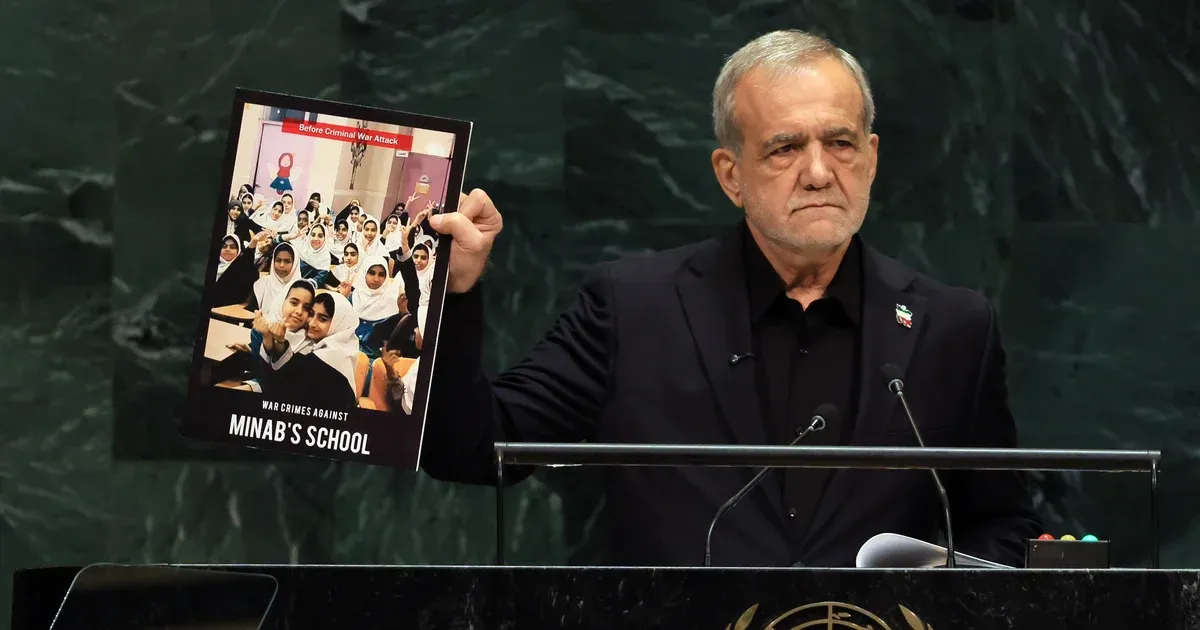
High-stakes diplomatic maneuvering accelerated on the sidelines of the United Nations General Assembly in New York, where Iranian Foreign Minister Abbas Araghchi presented a 7-day proposal to reopen the Strait of Hormuz and restart broader nuclear negotiations with the United States. The plan, which reflects core elements of the 14-point Memorandum of Understanding signed in June, offers to lift maritime restrictions in exchange for U.S. action on sanctions relief and unfreezing Iranian funds.
Iranian President Masoud Pezeshkian expressed a strong preference to conclude an agreement prior to the upcoming U.S. midterm elections in November. In interviews during his New York visit, Pezeshkian affirmed that Tehran would abide strictly by its commitments under a potential agreement, including permitting United Nations International Atomic Energy Agency inspectors back into Iranian facilities, while maintaining that Iran is not pursuing nuclear weapons.
Washington’s Posture and Naval Operations in the Strait
Despite ongoing diplomatic contacts involving U.S. envoys Steve Witkoff and Jared Kushner alongside Qatari mediators, President Donald Trump reportedly remains skeptical regarding Tehran’s offer. U.S. officials indicated that Washington is in no rush to finalize a deal, citing an advantageous operational position in the region.
According to U.S. Central Command, naval enforcement operations reinstated on July 14 have redirected 122 commercial vessels entering or exiting Iranian ports as of Friday, up from 115 on Wednesday. Over a recent two-day period, seven ships were redirected, bringing the total to 12 vessels turned back during the week. Concurrently, U.S. naval escorts oversaw the transit of nearly 40 million barrels of crude oil through the Strait of Hormuz within 48 hours, matching prewar baseline volume.
Global energy markets reacted to the diplomatic developments with moderate fluctuations. International benchmark Brent crude traded at approximately $103 per barrel at midday on Friday, down about 2.5% from Thursday following reports of the Iranian proposal. However, European Union Energy Commissioner Dan Jorgensen warned EU energy ministers in a formal letter that the ongoing war has created an energy price crisis linked to supply security, calling on member states to implement measures to sustain gas storage and lower energy consumption.
Timeline of Diplomatic Engagements and Strategic Warnings
A sequence of key diplomatic meetings and official statements took place throughout Friday, September 25, 2026, outlining the geopolitical landscape:
- 10:17 AM: Reports from Yemen highlighted a worsening humanitarian crisis as civil hostilities expanded to Red Sea coastal areas. The health system in Aden and Taiz provinces faced near collapse, illustrated by severe cases such as 7-year-old Tarek al-Salami, who was displaced from Mokha and delayed from receiving immediate medical care.
- 10:51 AM: The Saudi Arabian government announced plans for urgent chief-of-staff level military discussions with Turkey and Pakistan to support the kingdom following escalating Houthi missile and drone attacks.
- 11:20 AM: Iranian Foreign Minister Seyed Araghchi met Russian Foreign Minister Sergey Lavrov in New York to discuss bilateral cooperation across energy, transport, and trade, as well as shipping safety frameworks in the Strait of Hormuz involving Oman.
- 11:54 AM: Reports indicated that U.S.-Iran discussions in New York had advanced into a technical phase involving specialized delegations, with Qatari mediators working to bridge remaining differences over sanctions and joint strait management.
- 12:26 PM: President Donald Trump confirmed at the National Archives in Washington that he discussed the Iran war with visiting Chinese President Xi Jinping during the final day of Xi’s state visit.
- 12:53 PM: U.S. Ambassador to China David Perdue stated in a CNBC interview that President Trump made it explicitly clear to Beijing that any direct or indirect support to Iran, including intelligence or military equipment, was “totally unacceptable.”
Regional Military Conflict and Economic Enforcement
Beyond the diplomatic discussions in New York, regional hostilities remain active. The Saudi-led coalition reported intercepting Houthi-launched drones targeting Riyadh and two ballistic missiles aimed at Khamis Mushait. In response to the strikes, Pakistan Prime Minister Shehbaz Sharif stated at the UN that attempted attacks targeting the holy city of Mecca represented a firm “red line.” Meanwhile, Rashad al-Alimi, head of Yemen’s Presidential Leadership Council, issued a call for general national mobilization.
On the economic and civil aviation front, regional compliance with U.S. sanctions tightened following directives from Treasury Secretary Scott Bessent. Iraq’s Najaf airport suspended all Iranian commercial flights following official instructions from the prime minister’s office, joining other regional nations in enforcing airspace restrictions. In response, Mohammad Mokhber, adviser to Iran’s supreme leader, warned that restrictions on Iranian civil aviation could lead to broader operational disruptions across regional airspace.