
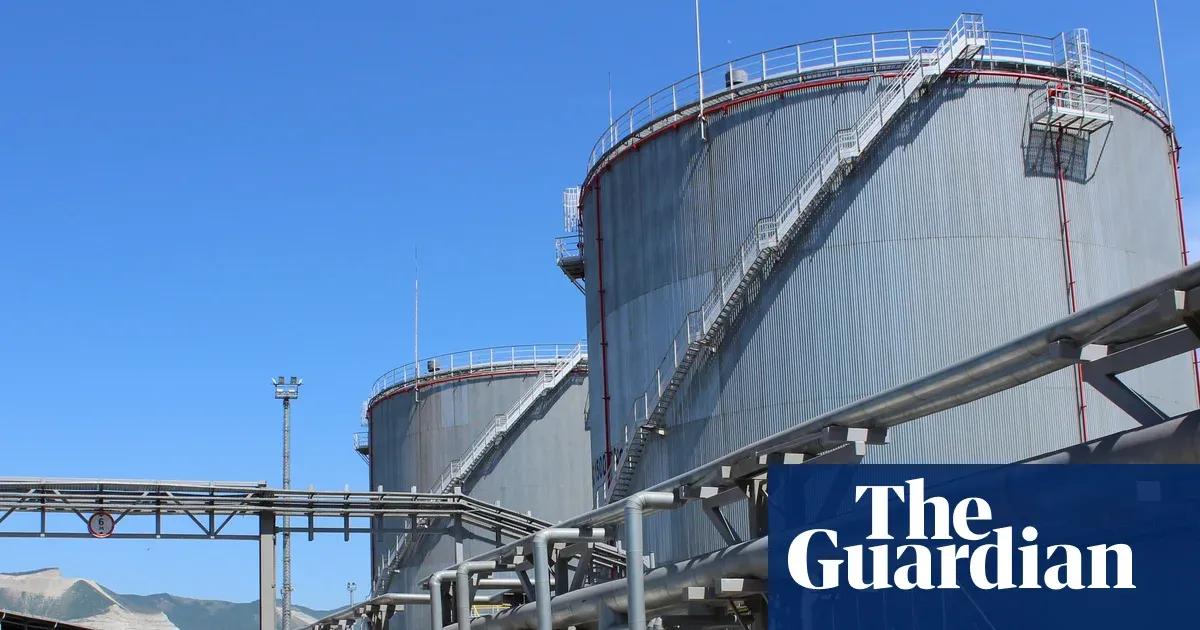
Russian authorities project a significant recovery in the nation’s overseas fuel shipments following a recent policy shift by the United States. According to high-ranking officials in Moscow, diesel exports could climb back to historical benchmarks by the close of the year, driven by a temporary easing of American restrictions on Russian petroleum products.
The projected rebound follows a period of severe disruption for the Russian energy sector. Overseas sales had previously plummeted due to a combination of self-imposed overseas restrictions and targeted military actions against domestic oil refineries. The landscape shifted when former developments surrounding global supply concerns led to an arrangement involving the administration of Donald Trump.
Export Projections and Market Capacities
Deputy Prime Minister Alexander Novak outlined the country’s petroleum outlook during an appearance on the Rossiya-24 state television channel. Novak stated that by the end of the year, foreign shipments could reach between 3 million and 3.5 million metric tons per month, effectively restoring volume to pre-crisis parameters. He noted that while market dynamics will continue to evolve, the underlying infrastructure retains the capacity to scale up output significantly.
The underlying framework of the arrangement involves supplying more than 2.25 million barrels of diesel to American and international markets. The temporary lifting of US sanctions on Russian fuel was initiated, according to announcements, to address broader supply pressures. However, the decision has immediately intersected with ongoing geopolitical tensions and diplomatic maneuvers surrounding the ongoing conflict.
Political Backlash and Diplomatic Repercussions
The fuel agreement has encountered substantial political resistance across the Atlantic. A bipartisan coalition of US senators has formally urged the administration to alter its course, arguing that relaxing restrictions supplies Moscow with financial resources to sustain military operations without requiring meaningful concessions from President Vladimir Putin. Lawmakers pointed to established legislation from 2022 intended to back Ukraine, with critics asserting that the policy undercuts existing economic pressure.
Concurrently, diplomatic channels have engaged Ukrainian leadership regarding the rationale behind the policy shift. Reports indicate that American envoys Steve Witkoff and Jared Kushner communicated to Ukrainian officials in Miami that the measures are designed to encourage renewed trilateral dialogue. Officials suggested that demonstrating openness to engagement could influence Moscow’s posture, though the specific diplomatic outcomes remain unconfirmed officially.
Security Developments and Regional Energy Stances
On the ground, the intersection of energy policy and military action remains acute. Ukrainian President Volodymyr Zelenskyy addressed security officials in Warsaw, emphasizing that Kyiv expects to maintain an energy ceasefire as an initial step toward de-escalation, provided that critical infrastructure attacks cease. Zelenskyy noted that Ukrainian forces had paused strikes on Russian energy sites following recent diplomatic announcements.
Despite these diplomatic considerations, hostilities continue to impact civilian populations. Officials reported casualties following strikes in residential areas across Kyiv and Kharkiv, underscoring the severe humanitarian toll accompanying the broader strategic maneuvers. As international stakeholders navigate these complex negotiations, broader European integration steps for Kyiv continue in parallel, highlighted by the European Union opening new negotiation clusters alongside neighboring Moldova.