
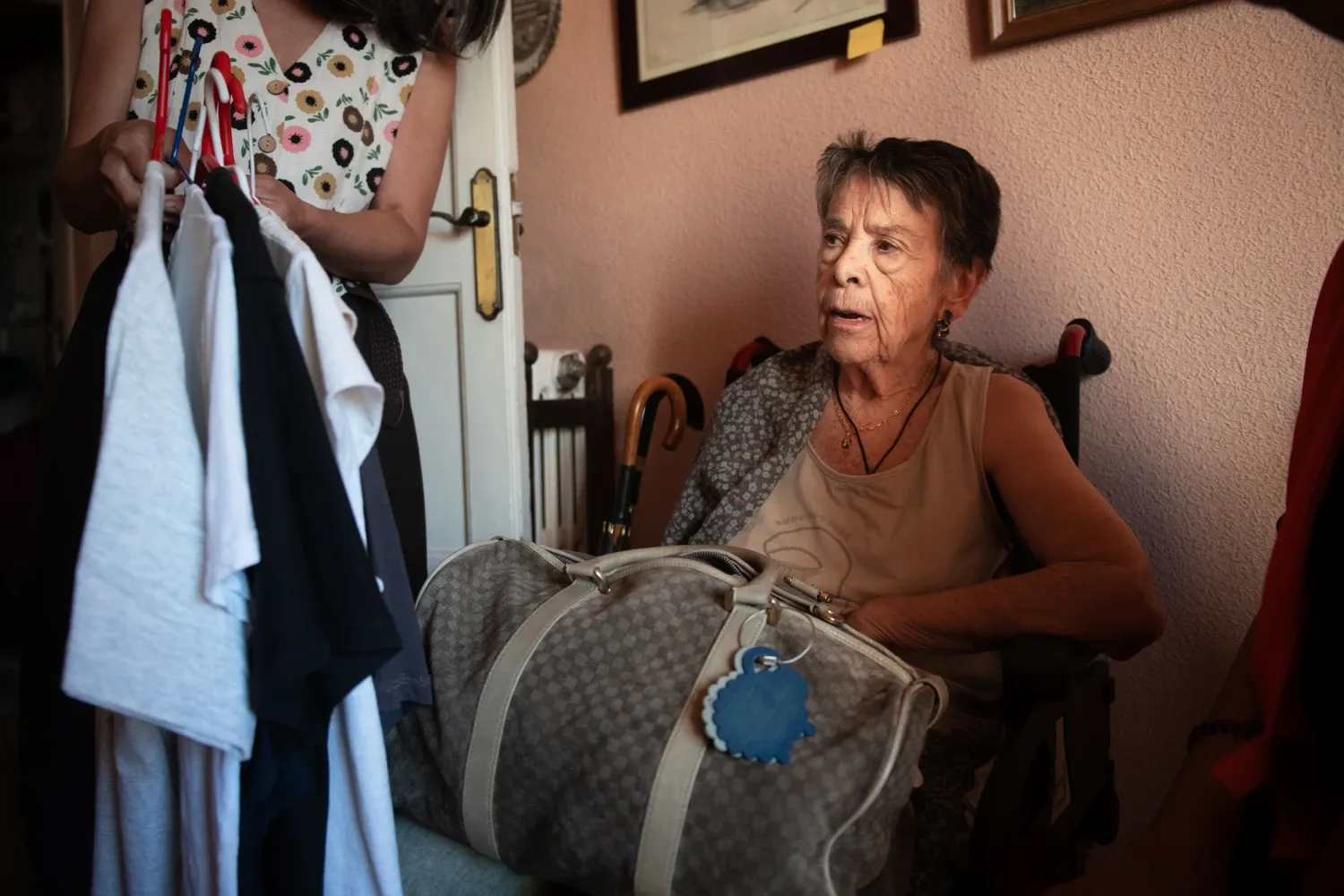
The forcible removal of 87-year-old Maricarmen Abascal from the Madrid apartment she had called home for more than seven decades has ignited a wave of public anger across Spain. The incident, which saw law enforcement assist in taking the wheelchair user out of her Retiro neighborhood building on a stretcher, has rapidly transformed from a localized legal dispute into a major catalyst for nation-wide protests over housing affordability, gentrification, and corporate property ownership.
Video footage of Abascal being transferred into an ambulance on Wednesday circulated widely across social platforms, drawing swift condemnation from local community groups and legal defense advocates. By the weekend, tens of thousands of citizens had taken to the streets of the Spanish capital, demanding immediate structural policy reforms to protect vulnerable tenants from skyrocketing rents and aggressive investment funds.
A Five-Year Battle Ends in Forced Removal
Abascal’s eviction marks the conclusion of a legal conflict lasting more than five years. According to the Madrid tenants union, the dispute began in 2018 after an investment fund named Urbagestión purchased the building in Madrid’s central Retiro neighborhood and subsequently sought a steep increase in her monthly rent payments.
Her attorney, Beatriz Duro, stated that representatives for Urbagestión and local court officials proceeded with the eviction despite pending legal filings, active humanitarian appeals, and ongoing efforts by public authorities to secure alternative living accommodations. Duro characterized the police presence and physical force utilized during the removal as completely disproportionate and unnecessary. Furthermore, Duro revealed that an anonymous benefactor had offered to pay the requested rent increase on Abascal’s behalf, but the property owner declined to sign a new lease agreement. Urbagestión did not respond to requests for comment regarding the proceedings.
Speaking to Spanish television the day prior to her removal, Abascal described the overwhelming psychological burden of her situation, stating that she felt as though she were living with a blade constantly positioned at her neck. Following the eviction, a social media video released by the local tenants union showed Abascal expressing gratitude to the neighbors and activists who had gathered outside her residence overnight in an effort to block police access.
Mass Demonstrations Spread to 16 Spanish Cities
The public response to the eviction was immediate and widespread. On Saturday, tens of thousands of marchers flooded the streets of Madrid, carrying banners reading “Not one more eviction, not one less neighbor, we are all Maricarmen” alongside demands for housing at fair prices. Some marchers set off flares as the crowd processed through major thoroughfares.
The central demonstration concluded at the Puerta del Sol plaza, where dozens of activists established an overnight camp with pitched tents. Protesters displayed a large model of a vulture suspended over the encampment to signify opposition to commercial real estate speculation and “vulture funds.” Similar demonstrations and rallies organized by housing groups took place across 16 cities nationwide, including Granada, Logroño, and Zaragoza.
Political Reaction and Broader Market Pressures
The controversy quickly escalated to the international political stage. Speaking at the United Nations General Assembly in New York on Wednesday, Spanish Prime Minister Pedro Sánchez denounced the eviction as a social tragedy that cannot be accepted by public institutions. Prime Minister Sánchez directed sharp criticism toward Madrid’s conservative regional administration, claiming officials have prioritized the development of luxury penthouses while neglecting the pressing demand for affordable public social housing.
The protests reflect broader structural friction across Spanish urban centers. In recent years, cities like Barcelona have witnessed large-scale public demonstrations against overtourism, where residents argue that the conversion of residential apartments into short-term vacation rentals has severely constrained the supply of long-term affordable housing. Addressing tourist-driven housing shortages, the European Union announced new regulatory guidelines earlier this month aimed at managing short-term holiday rentals in major tourism hubs.
The Impact on Daily Renters
For working residents in Madrid, Abascal’s removal highlights growing anxiety over basic living costs. Irene Hernández López, a 31-year-old test engineer living in the Chamberí district approximately two miles from Retiro, noted that residential housing has increasingly been converted into a speculative business product at the expense of personal living stability.
Hernández López explained that she pays 500 euros ($570) per month for a single room in an apartment shared with two roommates, noting that similar room listings across Madrid now cost between 500 and 600 euros despite stagnant regional wages. She called for increased price regulation, pointing out that fast-rising shelter costs are placing severe financial pressure on young workers.
Housing policy experts frame the situation as part of an international trend. Dan Nicander, secretary-general of the International Union of Tenants, noted that treating residential property primarily as a financial asset rather than a basic human home creates extreme challenges for local populations. Nicander emphasized that political leaders bear the responsibility to regulate real estate markets to ensure housing remains accessible as a fundamental right rather than a pure market commodity.