
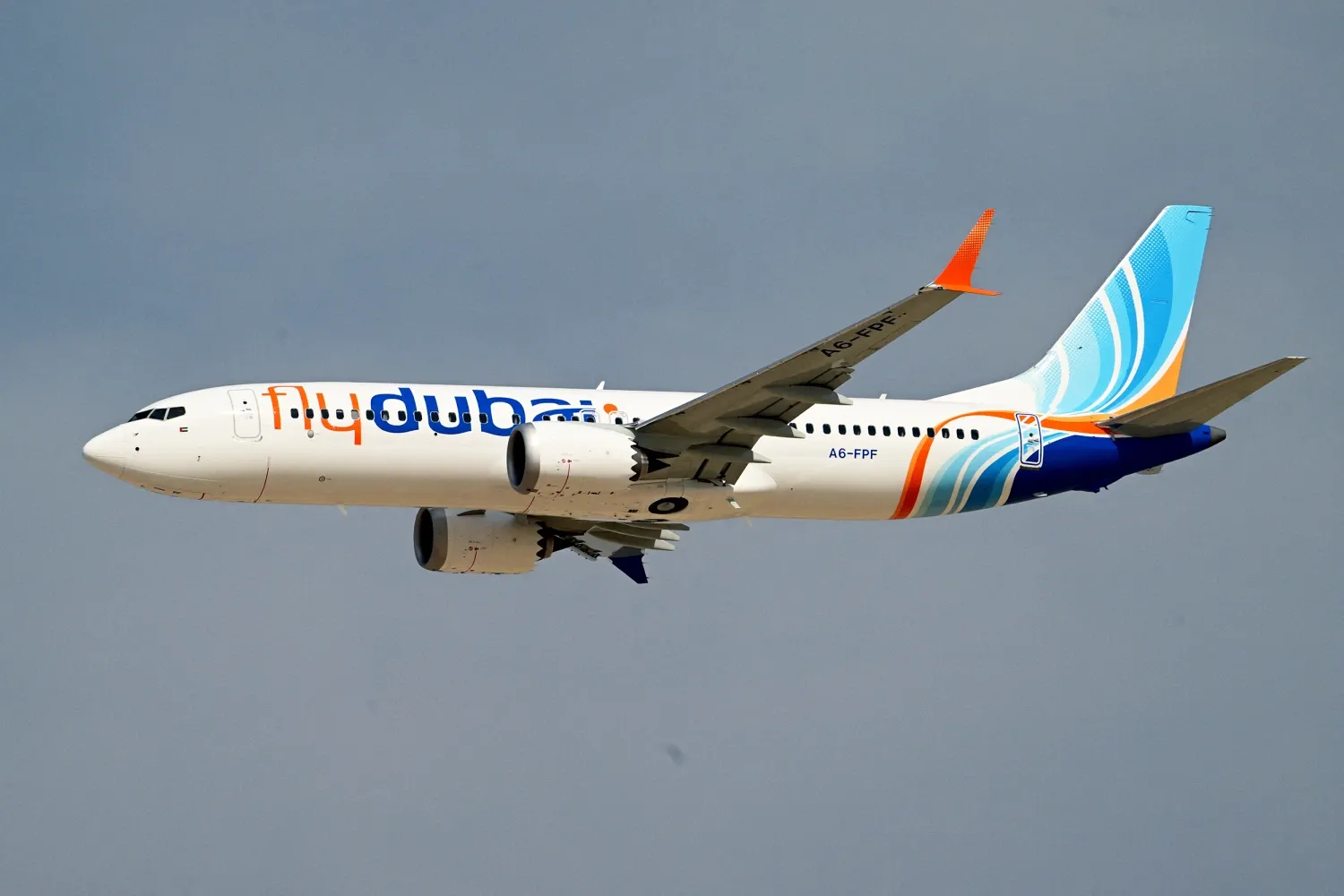
A terrifying midair crisis aboard an Israel-bound commercial airliner was narrowly averted after a pilot stabbed his fellow pilot inside the cockpit, sending the aircraft into a violent dive before quick-thinking passengers and crew managed to subdue the attacker. The incident occurred aboard Flydubai Flight FZ 1073, carrying 174 people from Dubai to Tel Aviv, forcing an emergency diversion to Saudi Arabia.
According to official statements and flight tracking metrics, the Boeing 737 experienced an abrupt loss of control during its flight path, leaving passengers fearing for their lives before on-duty crew and civilian travelers successfully secured the flight deck. Authorities across multiple nations have launched an international investigation into the events surrounding the high-altitude assault.
High-Altitude Terror: 29 Seconds of Free Fall
Data recorded by Flightradar24 revealed that the Boeing 737 plunged 14,125 feet in just 29 seconds as the violent struggle played out behind the locked cockpit door. Inside the cabin, the sudden loss of altitude generated immediate panic among the passengers as screaming echoed through the aisle.
Travelers on board described scenes of sheer chaos as the plane violently shook and went into a steep nose dive. Aviatar Alevi, a 17-year-old student passenger, recalled initially suspecting a severe mechanical failure before hearing shouts regarding a stabbing inside the flight deck. Another passenger, 70-year-old Motti Cohen Or, noted that passengers heard panicked shouting indicating an active attack inside the cockpit moments before the aircraft began descending rapidly toward the ground.
Despite the steep descent, the remaining crew members and resourceful passengers managed to restore stability to the aircraft, preventing a potential fatal crash.
Inside the Cockpit: Heroic Intervention Prevents Catastrophe
The turning point in the midair emergency came when passenger Yaniv Hayun, alongside three other travelers, rushed toward the flight deck after noticing the plane’s erratic behavior. Hayun described struggling to unlock the cockpit door, which was partially obstructed by the injured pilot on the inside who was attempting to facilitate entry.
Officials identified the stabbed aviator as Captain Smit Machchhar, an Indian national. Israeli leaders commended Captain Machchhar for his critical actions in unlocking the door despite sustaining severe injuries, enabling help to enter the flight deck. Israeli Prime Minister Benjamin Netanyahu praised Machchhar’s resolve, noting that his efforts directly saved the lives of everyone on board.
Upon breaching the cockpit, Hayun witnessed the attacker actively tampering with the controls rather than attempting to level the plane. Hayun confronted the assailant, physically subduing and choking the attacker before pulling him away from the flight desk. Relying on basic concepts he recalled from television programs, Hayun worked with the team to manipulate the flight controls and stabilize the aircraft. Following the intervention, the remaining flight crew successfully executed a safe diversion to Prince Sultan bin Abdulaziz International Airport, also known as Tabuk Airport, in Saudi Arabia.
International Investigation and Geopolitical Responses
The suspect, identified by investigators as an Omani citizen, was taken into custody by Saudi authorities at Tabuk Airport and subjected to immediate interrogation. Prime Minister Netanyahu stated on CBS Evening News that the attack appeared to be an attempt to crash the plane rather than a standard hijacking attempt, adding that the suspect is anticipated to be transferred to Dubai for further investigative joint proceedings.
In the United States, President Donald Trump confirmed he held detailed discussions with Netanyahu regarding the event, characterizing the incident as an extraordinary midair emergency. Meanwhile, Israeli Defense Minister Israel Katz publicly framed the stabbing as an attempted jihadist attack, though formal investigative reports remain ongoing.
“At this early stage, the underlying reasons and motives behind this event are unknown and remain subject to a formal investigation,” Flydubai stated, urging the public to refrain from premature conclusions while law enforcement gathers facts.
U.S. law enforcement officials briefed on the probe noted that preliminary findings strongly point toward an attempted act of terrorism, though no state actor or regional militant group has formally claimed responsibility. Saudi Embassy spokesperson Hessa Alyahya indicated that investigators are evaluating whether the incident stemmed from a personal conflict between aviators or involved external direction from entities such as Iran or the Houthis. However, senior U.S. officials clarified that there are currently no concrete indications of direct Iranian involvement.
Grounded Operations and Security Aftermath
Following the emergency landing in Saudi Arabia, a dedicated rescue flight transported the stranded passengers to Ben Gurion Airport in Tel Aviv. Returning travelers were greeted by emotional family members and well-wishers. Medical personnel from Magen David Adom assessed the passengers upon arrival, transporting one individual in his 50s to a medical center for mild chest injuries.
In response to the security breach, Flydubai temporarily suspended all flight operations to and from Israel to cooperate fully with regulatory inquiries. In the United States, Department of Homeland Security Secretary Markwayne Mullin affirmed that domestic transportation security agencies remain on heightened alert, though no credible domestic threats connected to the flight incident have been identified.
The high-profile incident arrives during a period of elevated political tension within Israel, coming just weeks before the nation’s scheduled parliamentary elections on October 27, where national security remains a central focus for leadership and voters alike.