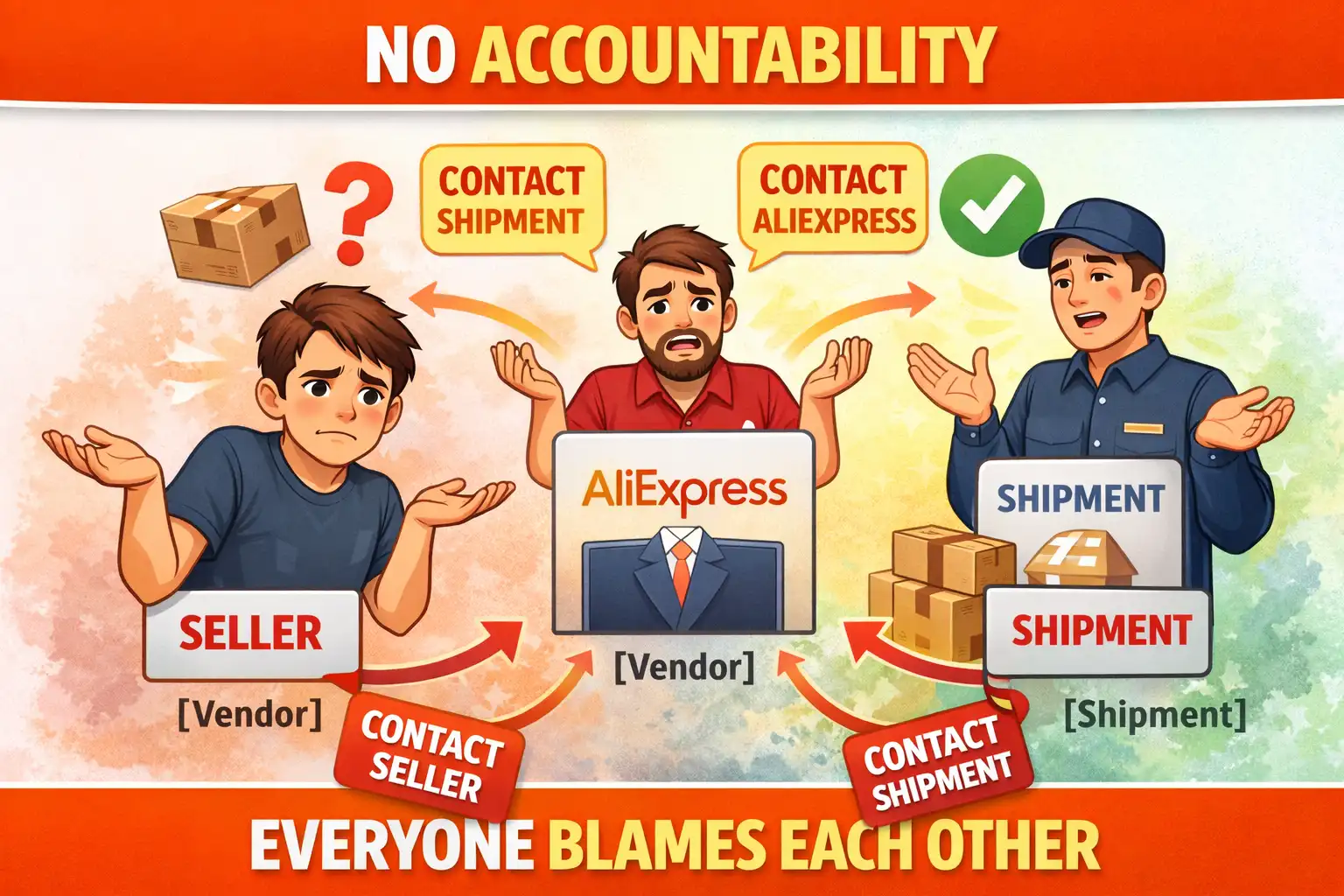
One of the most frustrating experiences in global online shopping is not when a package is late, and not even when a package is lost. The most frustrating situation is when something goes wrong and every party tells you to contact someone else. The platform tells you to contact the seller, the seller tells you to contact the shipping company, and the shipping company tells you to contact the platform. At that point, it feels like no one is responsible.
This is where many buyers become very angry and conclude that the platform is a scam or that nobody wants to take responsibility. But before jumping to that conclusion, it’s important to understand how responsibility is actually structured in global marketplaces, because the system is very different from local online stores.
Once you understand the structure, the situation still may not feel perfect, but it will make much more sense why this “circle of responsibility” happens so often.
Why everyone keeps redirecting you to someone else
In global marketplaces like AliExpress, there are usually three main parties involved in every order:
- the platform (AliExpress)
- the seller
- the logistics / shipping company
Each of these parties is responsible for a different part of the process.
The seller is responsible for:
- preparing the product
- packaging the product
- shipping the product
The shipping company is responsible for:
- transporting the package
- handling delivery
- updating tracking
The platform is responsible for:
- holding the payment
- providing dispute system
- managing buyer protection
👉 The problem is that when something goes wrong in the middle, responsibility overlaps.
And that’s when the “contact them, not us” loop begins.
The real issue is not always accountability, but system structure
From the buyer’s perspective, everything feels like one system. You buy on AliExpress, you pay on AliExpress, so naturally you expect AliExpress to solve everything. That expectation is understandable.
But AliExpress operates more like a marketplace than a store. It connects buyers and sellers and provides a protection system, but it does not physically ship the product and does not own the courier companies.
So when a package is lost, the situation becomes complicated because:
- the seller shipped the item
- the courier handled the delivery
- the platform holds the payment
👉 So who is responsible?
The answer is: the system resolves this through disputes, not through direct support conversations.
Why the dispute system is more important than customer service chat
Many buyers make a critical mistake. When something goes wrong, they try to solve everything through chat or email support. But in AliExpress, the real resolution system is not the chat support—it’s the dispute system.
This is a very important distinction.
Customer service chat often only gives instructions, but the dispute system is where decisions and refunds actually happen. If a package is not delivered, the correct path is usually:
- wait until buyer protection period is near ending
- open dispute
- select “item not received”
- provide tracking evidence
- escalate if needed
👉 The dispute system is the court. Chat support is just the receptionist.
Once you understand this, the process becomes less confusing.
Why it feels like “no one cares”
This feeling usually comes from communication style, not always from the final outcome. Many large platforms rely heavily on automated systems and structured processes instead of personal communication. This makes the system feel cold and unhelpful, even when there is actually a process running in the background.
So the experience becomes:
- lots of messages
- lots of instructions
- little emotional support
- slow resolution
👉 This creates the perception of no accountability
But in many cases, the system is still moving—just not in a way that feels personal or responsive.
The mindset that reduces risk before problems happen
Experienced buyers usually don’t rely on customer service to solve problems after they happen. Instead, they try to reduce the probability of problems before ordering.
They focus on:
- sellers with strong ratings and long history
- products with real buyer photo reviews
- shipping methods with better tracking
- not ordering urgent items
- understanding buyer protection timelines
This doesn’t eliminate problems completely, but it reduces how often you end up in the dispute system.
If you want to see examples of products that are usually selected based on seller reliability, review patterns, pricing balance, and delivery consistency, you can explore:

These are not purchase recommendations, but examples of how experienced buyers filter products to reduce risk before placing an order.
When you finally understand how the system works
AliExpress is not a normal store.
It is a marketplace system with multiple parties involved, and the resolution process is handled through structured disputes rather than personal customer service. Once you understand this, you stop expecting direct accountability from one single party and start using the system the way it was designed.
👉 Not by arguing in chat
👉 But by using the dispute system correctly
That is a very important difference.
A simple question to reflect on
When something goes wrong, are you trying to argue with support…
or are you using the dispute system the way the platform actually resolves problems?