
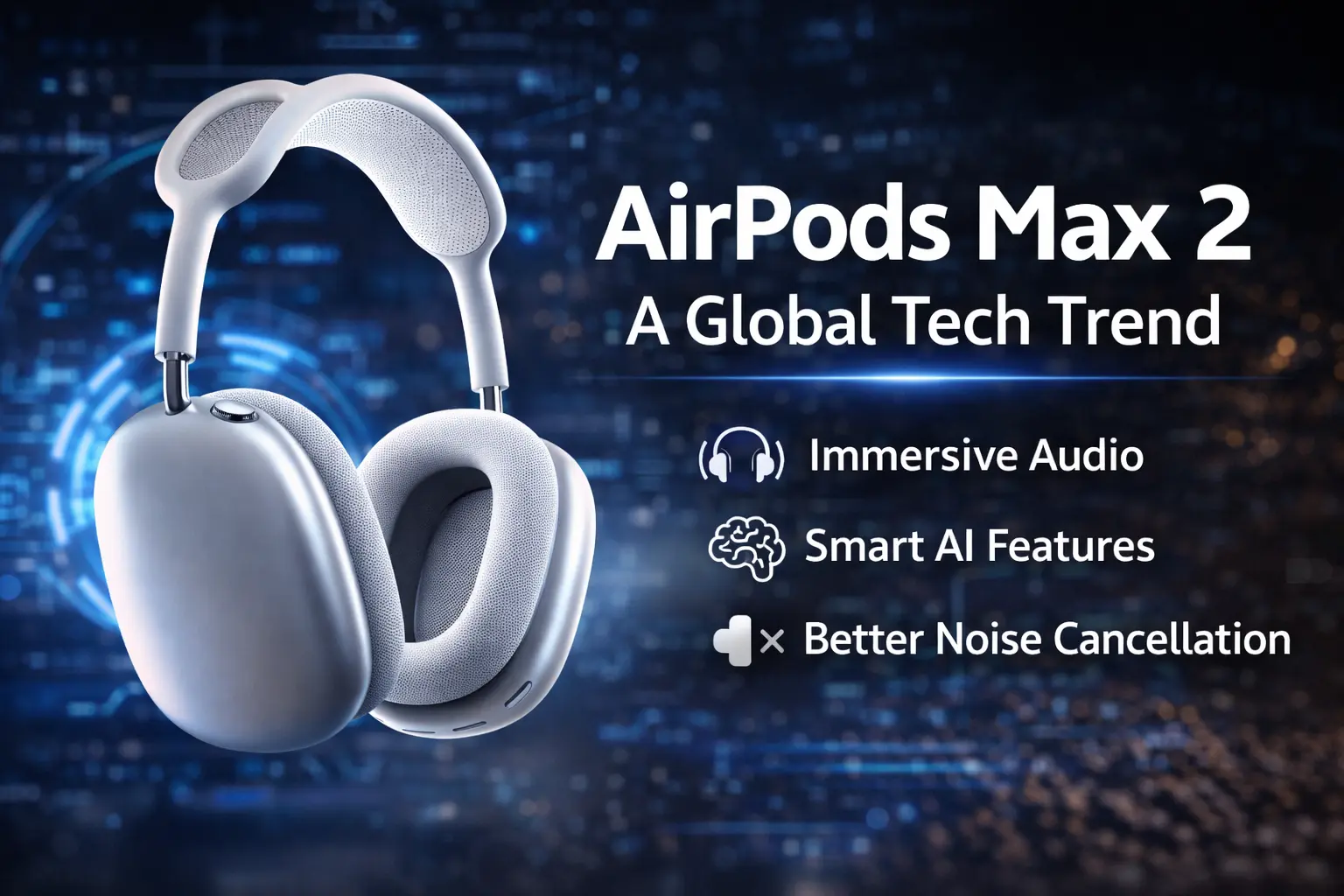
For years, wireless earbuds dominated the headphone market. Small, convenient, and easy to carry, they became the default choice for millions of users around the world.
But something interesting has started to happen recently.
A growing number of people are returning to large over-ear headphones, especially premium models like the Apple AirPods Max 2.
At first glance, this might seem surprising. After all, why would someone choose a bigger headset when smaller earbuds already exist?
The answer lies in three things that are shaping global tech trends today:
- immersive audio
- artificial intelligence integration
- and the demand for higher-quality sound experiences.
Apple’s newest generation of AirPods Max appears to sit directly at the intersection of those trends.
The Long Wait for the Second Generation
The original Apple AirPods Max launched in 2020, entering a market already dominated by premium brands like Sony, Bose, and Sennheiser.
Apple’s entry into this space was ambitious.
Instead of focusing only on audio quality, Apple designed the AirPods Max as part of a larger ecosystem experience, tightly connected with the iPhone, iPad, and Mac.
After several years without a major update, Apple finally introduced AirPods Max 2, bringing new hardware and features designed to compete with the best headphones on the market.
What’s Actually New in AirPods Max 2
From the outside, the design of the new model looks familiar.
Apple kept the recognizable aluminum ear cups and minimal industrial design.
Most of the improvements happen inside the headphones.
Here are some of the most important upgrades.
| Feature | What It Means |
|---|---|
| H2 chip | Faster processing and smarter audio features |
| Improved noise cancellation | Better blocking of background noise |
| Lossless audio via USB-C | Higher audio fidelity for music |
| Live translation | Real-time language translation |
| Conversation awareness | Volume lowers automatically when someone talks |
The headphones also maintain around 20 hours of listening time, similar to the previous generation.
For most users, the biggest difference will likely be the improved active noise cancellation, which Apple claims is significantly stronger than before.
Why Over-Ear Headphones Are Trending Again
The rise of premium headphones like AirPods Max 2 reflects a broader shift in how people consume audio.
Streaming services such as Spotify, Apple Music, and Tidal have dramatically increased the demand for higher sound quality.
People are no longer satisfied with compressed audio through tiny speakers.
Instead, they want:
- deeper bass
- wider soundstage
- more immersive listening
Over-ear headphones simply deliver those qualities better than small earbuds.
Think of it like watching a movie.
You can watch it on your phone, but the experience is completely different on a large cinema screen.
The same concept applies to audio.
Artificial Intelligence Is Entering the Audio World
Another major reason AirPods Max 2 are getting attention is the integration of AI-powered features.
One of the most talked-about additions is live translation, which allows conversations to be translated in real time through Apple’s AI systems.
This is a fascinating direction for audio devices.
Headphones are slowly evolving from simple listening tools into smart assistants.
Future versions could potentially:
- translate conversations instantly
- adjust sound automatically based on surroundings
- personalize audio profiles for each user.
In other words, headphones are becoming intelligent wearable technology.
The Price Debate
Premium technology often comes with a premium price.
The AirPods Max 2 are expected to launch at around $549, placing them firmly in the high-end headphone category.
For comparison:
| Headphones | Typical Price |
|---|---|
| Sony WH-1000XM5 | ~$399 |
| Bose QuietComfort Ultra | ~$429 |
| AirPods Max 2 | ~$549 |
That higher price reflects Apple’s focus on ecosystem integration and build quality.
Whether that premium is justified depends on how much value someone places on features like spatial audio, Apple ecosystem compatibility, and AI integration.
Who Are These Headphones Really For?
Not everyone needs a $500 pair of headphones.
But for certain users, the AirPods Max 2 make a lot of sense.
Apple Ecosystem Users
People already using iPhones, iPads, and Macs will benefit the most from Apple’s seamless connectivity.
Music Enthusiasts
Over-ear headphones offer deeper immersion than typical earbuds.
Frequent Travelers
Noise cancellation and comfort make long flights much more enjoyable.
The Bigger Trend: Personal Audio Is Becoming More Immersive
Devices like AirPods Max 2 represent a larger shift in technology.
Audio is no longer just background noise while we work or commute.
Instead, it’s becoming a fully immersive experience.
From spatial audio in movies to AI-assisted listening environments, the future of headphones is moving toward something closer to personal sound environments.
In that sense, the AirPods Max 2 are not just another pair of headphones.
They are a glimpse of how personal audio technology may evolve over the next decade.
One Interesting Question
If you had the choice, would you rather use:
- small wireless earbuds for convenience
- or large premium headphones like AirPods Max for better sound quality?
It’s interesting how something as simple as listening to music is slowly becoming a technological experience.