
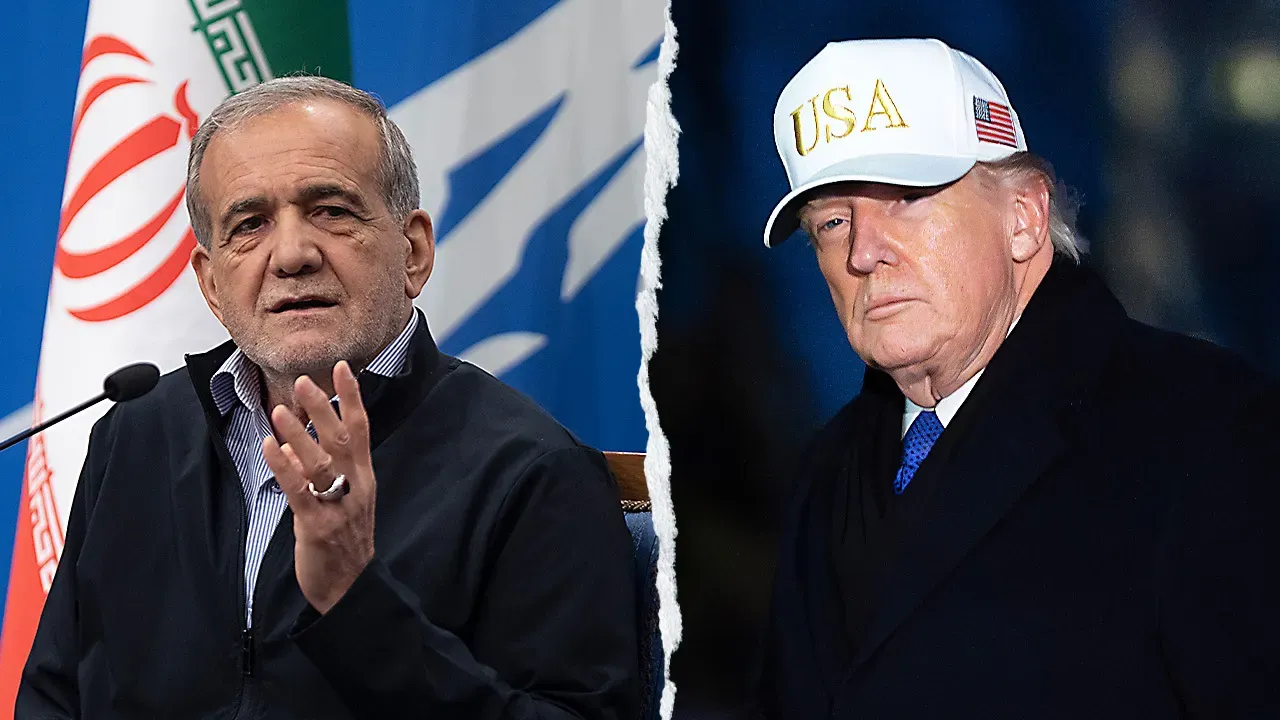
The diplomatic theater at the 81st session of the United Nations General Assembly in New York produced a sharp study in contrasts as U.S. President Donald Trump and Iranian President Masoud Pezeshkian took the same podium within a 24-hour window. While both leaders traded aggressive warnings before the international assembly, quietly orchestrated backchannel conversations were simultaneously unfolding on the sidelines, underscoring a complex tug-of-war between public posture and private negotiation.
Dueling Rhetoric on the United Nations Podium
Addressing the assembly, Iranian President Masoud Pezeshkian framed his nation as a victim of external hostility, placing responsibility for regional escalation directly on Washington and Israel. Pezeshkian rejected terrorism labels, insisting that Tehran’s military actions were strictly defensive. He asserted that innocent Iranian citizens had faced targeted strikes, arguing that his nation was reacting to aggression imposed by the U.S. and its ally.
Pezeshkian’s remarks directly followed an uncompromising address by President Trump from the very same stage. Trump laid out a stark choice for Tehran, warning that the Iranian government must either agree to terms or confront severe military consequences. Trump openly raised the prospect of rapidly dismantling the Islamic Republic’s capabilities to prevent future security threats across the region.
Foreign policy analyst Behnam Ben Taleblu, a senior fellow at the Foundation for Defense of Democracies (FDD), observed that Pezeshkian’s anti-imperialist rhetoric likely drew little more than a smirk or chuckle from the U.S. President. Taleblu argued that Washington operates from a position of strategic leverage, noting that while Pezeshkian sought to present Tehran’s stance through a Global South perspective, the Iranian population remains the primary long-term victim of the regime’s own domestic and foreign policies.
Quiet Backchannel Contacts Behind Closed Doors
Despite the fierce language delivered from the microphone, parallel diplomatic channels remained active on the sidelines of the UN gathering. Trump confirmed that U.S. special envoy Steve Witkoff and Jared Kushner held preliminary discussions lasting approximately three hours with Iranian representatives, describing the exchanges as productive.
According to official accounts, the backchannel dialogue was conducted through third-party intermediaries who shuttled messages between the American delegation and Iranian representatives, which included Iranian Foreign Minister Abbas Araghchi. These discreet contacts highlighted an ongoing effort by both capitals to test whether a negotiated resolution remains feasible amid escalating regional tensions.
Strategic Maneuvering and Firm Red Lines
The duality of open hostility and quiet communication reflects a calculated strategy by both administrations. Expert analysis indicates that Washington and Tehran are seeking to use time to their tactical advantage, placing the responsibility on the opposing side to choose between further military escalation or structured diplomatic engagement.
However, fundamental sticking points continue to cloud the prospect of a breakthrough. While Pezeshkian signaled that Iran would not submit to military threats, he reiterated a willingness to engage in dialogue. Foreign policy observers caution that talks could quickly hit an impasse if Tehran delays or fails to offer substantive policy shifts regarding critical issues, including its nuclear initiatives, activities in the Persian Gulf, and transit security through the Strait of Hormuz.
Ultimately, while both administrations seek political leverage through podium declarations and exploratory talks, the underlying strategic red lines between Washington and Tehran remain essentially unchanged.