
At first glance, AliExpress looks like the perfect place to find cheap items. You scroll through listings, see low prices, and feel like you’ve found a great deal. Especially for small items like accessories, keychains, or simple gadgets, the pricing can look almost too good to ignore.
But then something unexpected happens.
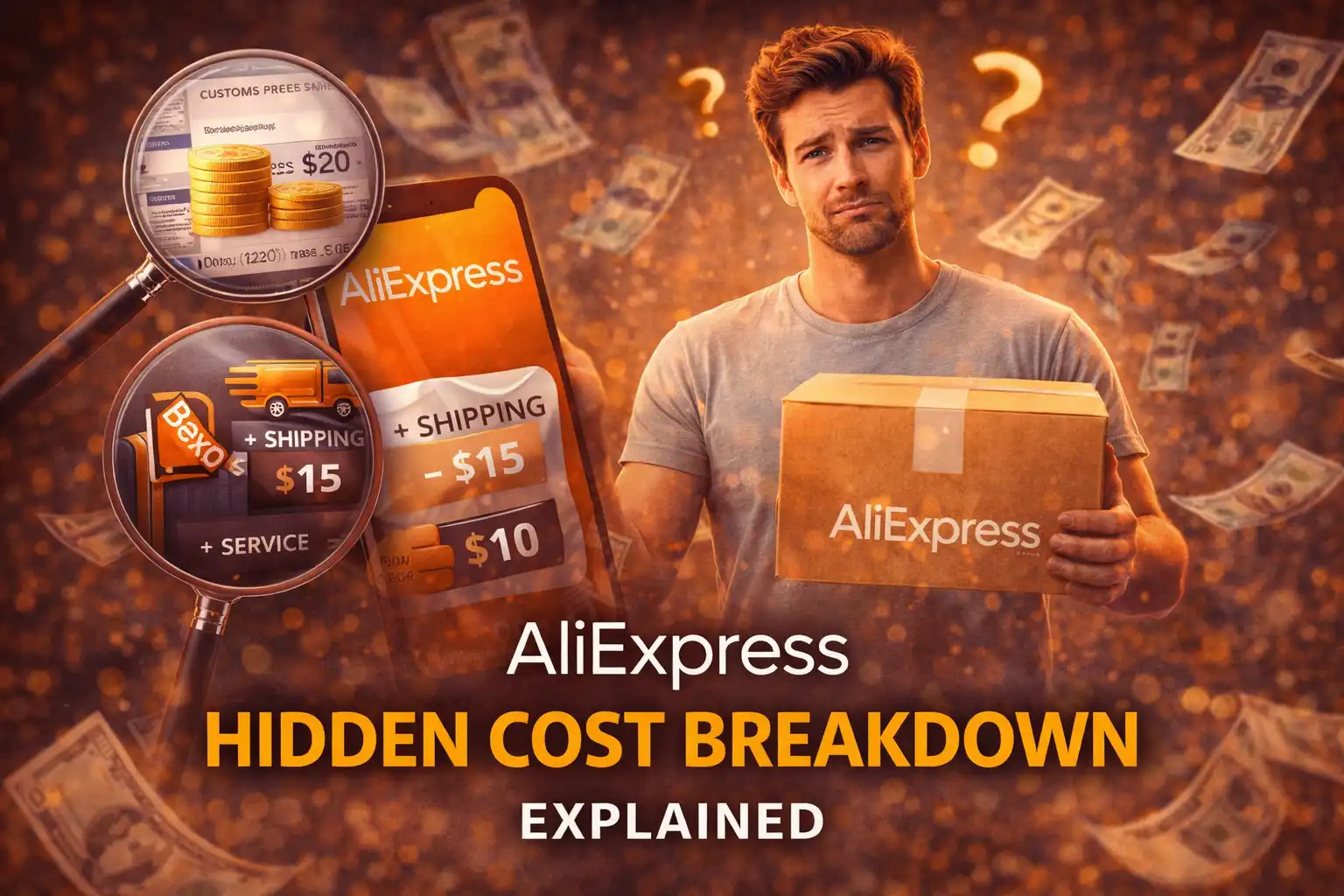
By the time the item reaches you, the total cost no longer feels cheap. Shipping fees, additional charges, and sometimes import-related costs start stacking up. What initially looked like an $8 purchase can quietly turn into something much higher. And this is the point where many buyers feel confused, even misled.
The important thing to understand is this: the system is not hiding costs on purpose, but it also doesn’t always present the full picture in a way beginners can easily understand. Once you break down how cross-border pricing works, the situation becomes much clearer—and more controllable.
Where the “cheap price” illusion begins
When browsing AliExpress, the first number you see is usually the product price.
That number is designed to attract attention.
But in international shopping, the real cost is not just:
- product price
It’s:
- product price
- shipping fee
- import tax (depending on country)
- handling or customs-related charges
👉 The mistake most people make is focusing only on the first number
And ignoring everything else that comes after.
Why small items can feel the most expensive
This is where things get counterintuitive.
You would expect small items to be cheaper overall. But in many cases, they feel more expensive relative to their value. Why? Because fixed costs like shipping and handling don’t scale down as much as the product price.
For example:
- a small item → low product cost
- but shipping stays relatively high
- and import fees may still apply
👉 so the ratio becomes unbalanced
That’s why a cheap item can feel “not worth it” once everything is included.
The part many buyers don’t see: how international fees work
When you order from another country, your package goes through multiple systems:
- export processing
- international transit
- import customs in your country
- local delivery handling
At the import stage, some countries apply:
- taxes
- duties
- handling fees
These are not always shown clearly at checkout because they depend on local regulations. This is why many buyers feel surprised when they have to pay additional fees upon delivery.
👉 This is not unique to AliExpress—it’s part of global shipping rules
Why it feels worse compared to other apps
Some platforms feel more transparent because they:
- include taxes upfront
- bundle shipping into pricing
- localize inventory
AliExpress, on the other hand, often shows:
- base product price first
- optional or variable shipping
- external tax handling
👉 This creates a perception gap
The cost is not always higher—it’s just structured differently.
When a “cheap deal” actually makes sense
Here’s the key insight most experienced buyers use:
👉 evaluate total cost, not item price
Instead of asking:
“Is this item cheap?”
Ask:
“Is the final cost still worth it compared to local options?”
Because sometimes:
- even with shipping and tax
- the total is still competitive
And sometimes it’s not.
How to avoid overpaying on small purchases
There are a few practical adjustments that make a big difference:
- avoid buying very low-value items individually
- combine items into one order when possible
- prioritize sellers with better shipping deals
- check estimated total before committing
👉 This reduces the impact of fixed costs
The smarter way to approach shipping costs
This is where strategy comes in.
Instead of treating each order as a one-time purchase, experienced buyers often structure their orders:
- placing orders in cycles
- grouping purchases logically
- avoiding urgent, one-off buying
This allows them to:
- spread shipping cost across items
- reduce emotional decisions
- maintain better value overall
The deeper issue is not price—it’s expectation
Most frustration doesn’t come from the cost itself.
It comes from expectation mismatch.
Buyers expect:
- cheap product = cheap total
But in global commerce:
👉 cheap product ≠ cheap final cost
Once you understand that difference, the experience becomes more predictable.
If you want to see examples of products that are typically chosen with this kind of cost awareness in mind—based on seller reliability, review patterns, and pricing balance—you can explore them here:
These are not recommendations to buy, but references to show how experienced buyers evaluate products beyond just the listed price.
When the system finally makes sense
AliExpress is not always the cheapest option.
But it can be one of the most flexible.
If you approach it without understanding the full cost structure, it feels misleading. But if you evaluate total cost, choose the right type of products, and structure your orders properly, it becomes much easier to control.
👉 The platform doesn’t change—the way you use it does.
A simple question to reflect on
Are you still focusing on the price you see first…
or are you starting to evaluate the real cost behind it?