
Technology has a strange habit of slowly becoming invisible. The things that once felt futuristic—Bluetooth headsets, voice assistants, wireless earbuds—eventually become normal everyday tools.
Now another device is starting to move in that direction: AI smart glasses.
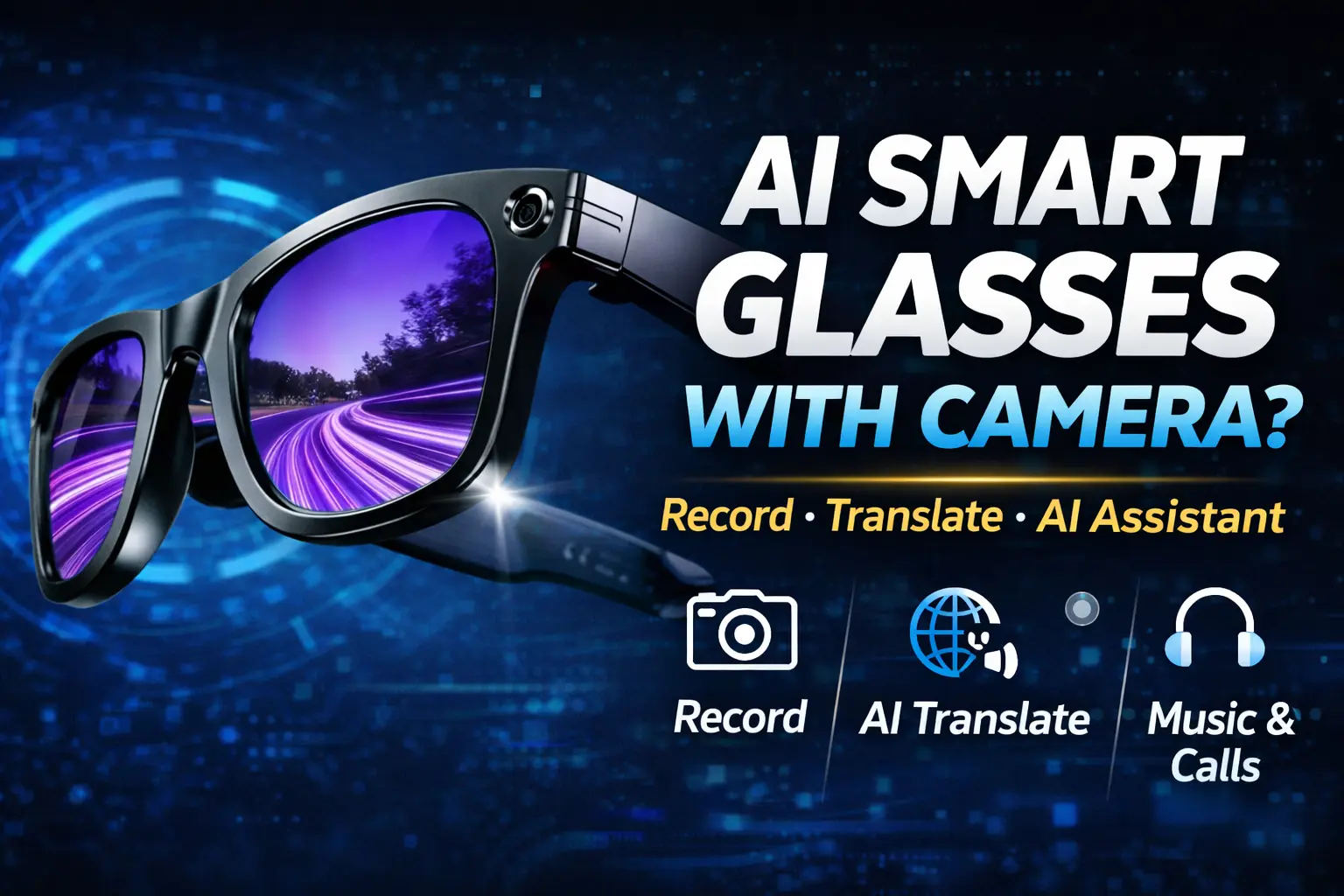
At first glance, the GUHUAVMI W610 AI Smart Glasses look like ordinary sunglasses. They have a familiar rectangular frame, dark lenses, and a design that wouldn’t look out of place in a casual outfit.
But inside those frames sits something far more interesting:
a camera, Bluetooth audio system, AI assistant, translation engine, and wireless connectivity.
In other words, these glasses are not just eyewear.
They are closer to a tiny wearable computer that happens to sit on your face.
The real question is: are they actually practical, or just another tech gimmick?
Let’s explore.
First Impression: Glasses That Don’t Look Like Gadgets
One of the biggest challenges for wearable technology has always been design.
Many smart devices fail simply because they look too futuristic or too bulky. Nobody wants to wear something that screams “I’m wearing a gadget.”
Interestingly, these AI smart glasses solve that problem quite well.
The frame design is intentionally simple. If someone saw you wearing them across the room, they would probably assume you were wearing regular sunglasses.
That subtle approach matters more than people realize.
Technology becomes useful only when it blends into everyday life.
Think about wireless earbuds. When they first appeared, they looked unusual. Now they’re completely normal.
Smart glasses are trying to follow that same path.
What These AI Smart Glasses Can Actually Do
At their core, these glasses combine several technologies into one wearable device.
Here is a quick overview of the main capabilities.
| Feature | What It Means in Real Life |
|---|---|
| Built-in camera | Capture photos and video directly from your perspective |
| AI object recognition | Identify objects and answer questions |
| Translation | Translate languages in real time |
| Bluetooth audio | Listen to music and answer calls |
| Voice assistant | Ask questions without touching your phone |
| WiFi transfer | Send photos and videos directly to your phone |
On paper, that sounds impressive. But what does it feel like in practice?
The Built-In Camera: Seeing the World From Your Perspective
One of the most interesting parts of these glasses is the 800-megapixel camera module (with HD recording support).
The camera sits discreetly on the side of the frame.
This placement means the camera captures what you are naturally looking at, which creates a very different experience compared to using a phone camera.
Imagine situations like:
- walking through a new city
- recording a cycling route
- capturing moments without holding a phone
It feels more natural because the camera follows your point of view.
A simple analogy might help here.
Using a phone camera is like holding a window in front of you.
Using smart glasses is more like recording directly from your eyes.
That subtle difference changes the way moments are captured.
AI Object Recognition: When Glasses Become an Assistant
The glasses also include AI object recognition and question-answer features powered by built-in AI functions.
For example, if you look at something and ask a question, the AI can attempt to identify it.
Possible use cases include:
- identifying objects
- asking general questions
- receiving information about what you’re seeing
It’s similar to asking a voice assistant on your phone, but the experience feels more integrated because the device sits directly on your face.
Instead of reaching for a phone, the glasses act like a wearable assistant.
Of course, this technology is still evolving, so response time can vary. Some users report that responses take 2–3 seconds, which is quite normal for AI queries.
Bluetooth Audio: Music and Calls Without Earbuds
Another interesting feature is the open-ear audio system built into the frame.
Unlike traditional headphones, these glasses allow you to hear music while still being aware of your surroundings.
Think of it like ambient audio.
Instead of blocking outside sound completely, the speakers direct sound toward your ears while keeping environmental awareness.
This is particularly useful when:
- walking outside
- commuting
- cycling
- working in public spaces
You can listen to music or take calls without isolating yourself from the environment.
Several buyers mention that call clarity remains good even in noisy environments, thanks to dual microphones with noise reduction.
Translation and AI Conversation
One of the more futuristic functions is real-time translation.
The glasses support multiple languages including:
- English
- Spanish
- French
- German
- Japanese
- Korean
- Indonesian
- Arabic
- and many others.
In theory, this allows users to communicate across languages more easily.
While translation accuracy depends on the app and internet connection, the concept itself is powerful.
Instead of pulling out your phone to translate something, you could simply ask through your glasses.
It’s a small change in interaction, but potentially a big shift in convenience.
Battery Life and Daily Usage
Battery capacity is around 270 mAh, which might sound small compared to smartphones.
But remember, these glasses are not powering a large display.
Most users report battery usage around:
| Usage Type | Estimated Duration |
|---|---|
| Music listening | up to ~8 hours |
| Mixed use | several hours |
| Standby | longer depending on connection |
For wearable devices, this is fairly typical.
Fast charging also helps reduce downtime between uses.
Storage and Connectivity
The glasses include 32GB of internal storage, allowing you to store photos, videos, and recordings directly on the device.
They support multiple connection methods:
- Bluetooth 5.3
- WiFi
- Android and iOS compatibility
That flexibility means you can easily transfer files to your phone or connect the glasses to the companion app.
Pros and Cons
Every device has strengths and limitations.
Here’s a realistic overview.
Pros
| Advantage | Why It Matters |
|---|---|
| Multiple features in one device | Camera, AI, music, calls |
| Hands-free recording | Capture moments naturally |
| Lightweight wearable design | Comfortable for daily use |
| AI assistant capability | Information on demand |
| Good value for tech features | Affordable compared to premium smart glasses |
Cons
| Limitation | Explanation |
|---|---|
| Battery smaller than phones | Needs regular charging |
| AI responses depend on connection | Internet may affect speed |
| Camera quality not equal to flagship phones | Designed for convenience rather than professional photography |
These trade-offs are fairly typical for wearable tech.
The goal of the product is convenience and accessibility, not replacing professional cameras or smartphones.
Who These Smart Glasses Are Best For
These glasses are particularly interesting for people who enjoy tech gadgets and wearable devices.
They may be useful for:
Tech Enthusiasts
People curious about AI and wearable technology.
Travelers
Hands-free recording and translation can be helpful when exploring new places.
Everyday Convenience
Users who like listening to music or answering calls without traditional earbuds.
Where to Check the Product
If you’re curious about the latest price, product options, or buyer feedback, you can check the product page here:
Top On Sale Product Recommendations!
New 800W Camera AI Glasses Men Color-Changing Smart Translation Glasses Photo Video Recording Waterproof Call Smart Sunglasses
Price Now: EUR 37.96 (Original price: EUR 84.82, 55% off)
🔗Click & Buy:
Prices often fluctuate depending on promotions and discounts.
Final Thoughts: Are AI Smart Glasses the Future?
Devices like these represent an interesting step toward more natural human-technology interaction.
Instead of pulling out phones constantly, technology gradually moves closer to our daily habits.
Smart watches moved technology to the wrist.
Wireless earbuds moved audio into everyday life.
Smart glasses attempt to move computing directly into our field of vision and daily actions.
Whether they become mainstream or remain niche gadgets is still uncertain.
But one thing is clear:
the idea of wearable AI technology is no longer science fiction.
What Do You Think?
Would you actually wear AI smart glasses like these in daily life?
Or do you think smartphones are still the better solution for most situations?
I’m curious how people feel about this kind of technology.