
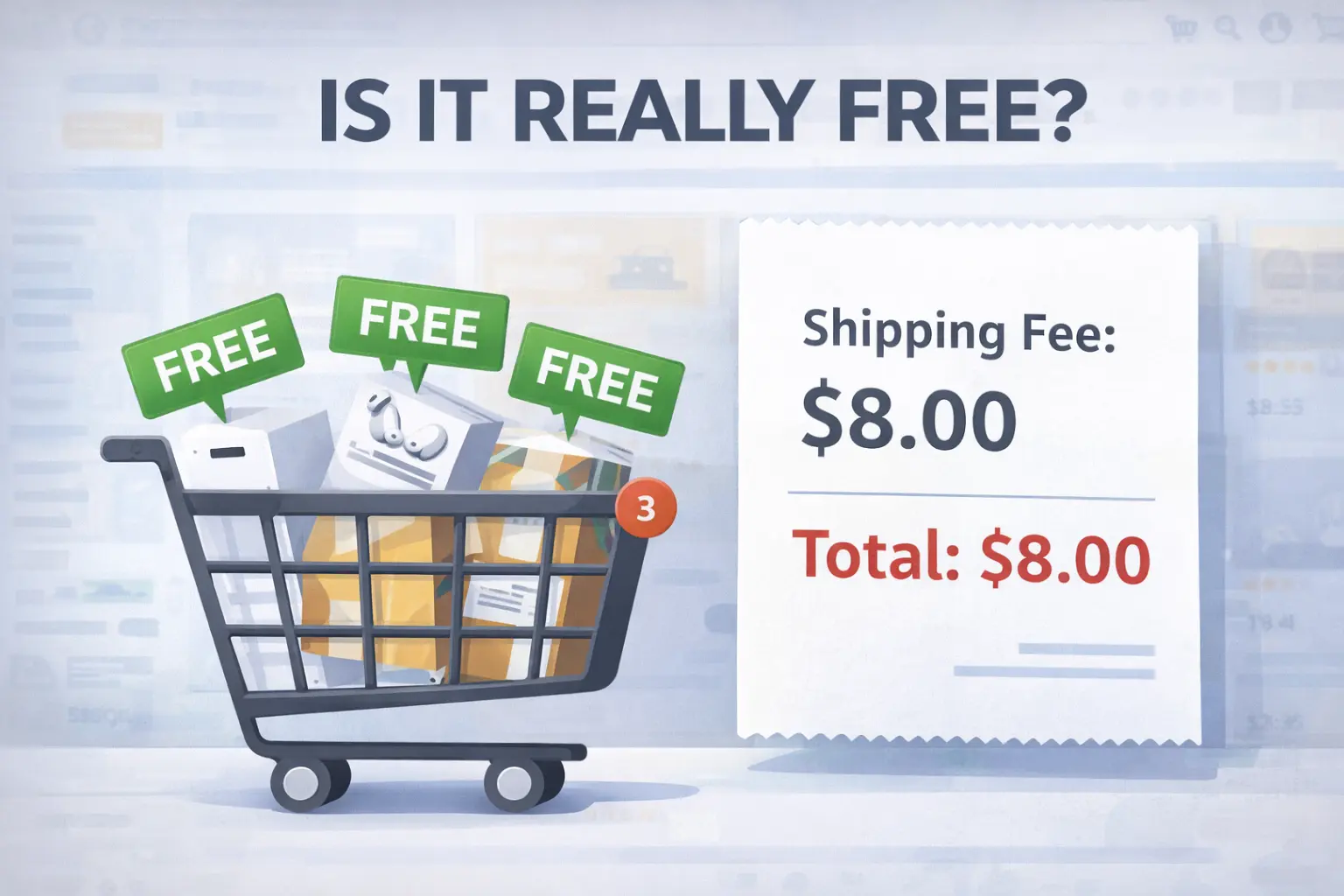
Online shopping promotions can be very tempting. When a marketplace advertises something like “Choose 3 items for free”, many shoppers naturally assume they will receive those items without paying anything.
But occasionally, after selecting the items, buyers discover that they must still pay a fee — sometimes for shipping or processing. This can make the promotion feel misleading, especially when the word “free” appears prominently in the advertisement.
If you’ve experienced this situation on AliExpress, you’re not alone. Many new users encounter similar confusion when interacting with promotional campaigns on large marketplaces.
Let’s break down what might actually be happening.
When “Free” Doesn’t Feel Free
Imagine browsing a marketplace and seeing a banner that says:
Choose 3 items for free
You select the items, add them to your cart, and expect the checkout total to be zero.
But when you reach the final step, a fee appears — in this case around $8.00.
At that moment the promotion can feel deceptive. After all, if something is free, why is there a payment required at all?
The answer usually lies in how marketplace promotions are structured.
How Promotional Campaigns Often Work
Large marketplaces like AliExpress frequently run campaigns designed to attract new users or encourage buyers to try certain products.
However, many of these promotions operate under a “free item + shipping cost” model.
In other words:
| Promotion Claim | What It Often Means |
|---|---|
| Free items | The product itself is free |
| Shipping fee | Buyer pays delivery cost |
| Limited promotion | Only for new accounts or first orders |
From the platform’s perspective, the product may technically be free because the seller is not charging for the item itself. But the buyer still covers the shipping or logistics cost.
This difference between “free product” and “free delivery” is where many misunderstandings happen.
Why Marketplaces Use This Model
To understand why this model exists, it helps to think about how international shipping works.
Even if a product costs only a few dollars to manufacture, sending it across countries still requires:
- packaging
- logistics handling
- transportation
- local delivery services
Those costs cannot simply disappear.
So some promotional campaigns remove the product price but still charge the shipping fee.
It’s similar to certain restaurant promotions where a meal might be discounted but delivery fees still apply.
Why the Advertisement Can Feel Misleading
Even though the system may technically be correct, the marketing message can easily create confusion.
When buyers read “free items”, most people naturally interpret that as no payment required at all.
But if the details about shipping or processing fees are not clearly highlighted, the promotion may appear misleading.
This is especially true for new users who are not familiar with how marketplace promotions usually work.
How Buyers Avoid This Confusion
Experienced online shoppers often follow a few simple habits when evaluating marketplace promotions.
First, they check the checkout page before assuming a deal is completely free.
Second, they look for phrases like:
- shipping fee applies
- delivery cost required
- processing fee
These details often appear in smaller text within promotional campaigns.
Third, many buyers read comments or reviews from other users to see how the promotion actually works in practice.
Discovering Better Deals Without Confusion
Online marketplaces are full of deals, but not all promotions are easy to understand at first glance.
Many experienced shoppers prefer exploring curated product recommendations and trending gadgets instead of relying only on promotional banners.
If you’re interested in discovering useful gadgets and trending everyday products that global buyers are currently exploring, you can browse curated insights here:
Learning from real buyer experiences can make online shopping much smoother.
Is the Promotion Actually a Scam?
Most of the time, promotions like this are not scams — they are simply marketing campaigns structured around free items but paid shipping.
However, if the promotion does not clearly explain the shipping fee until the final checkout stage, it can definitely feel misleading to buyers.
That’s why understanding how these promotions work is important before placing an order.
What Do You Think?
Have you ever encountered an online promotion that claimed something was free, but later revealed additional costs?
Do you think marketplaces should explain these promotions more clearly before buyers add items to their cart?
Your experience might help other shoppers avoid the same confusion.