
American Professors Recognized for Economic Stabilization Models
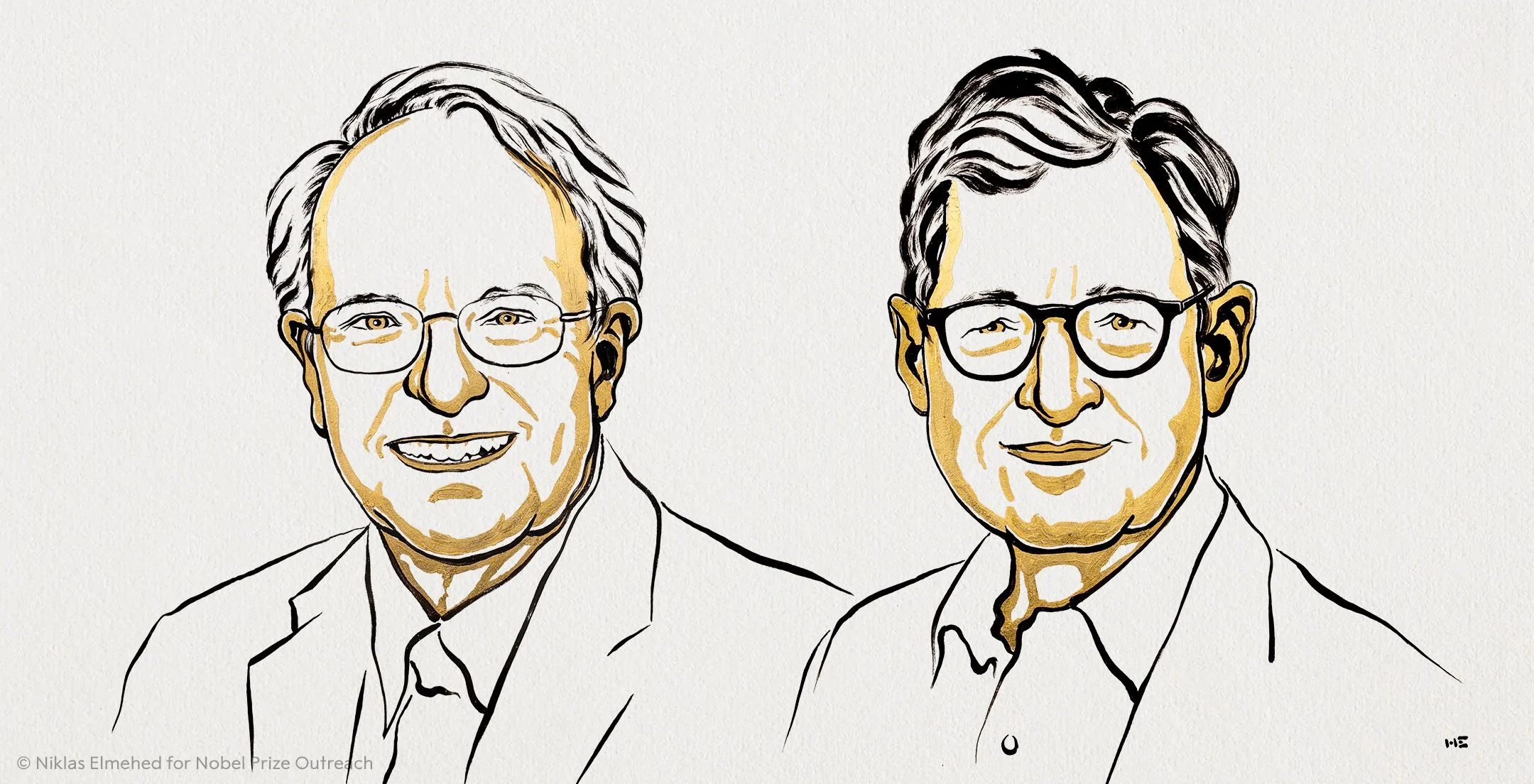
The Royal Swedish Academy of Sciences announced in Stockholm on Monday that American professors Robert E. Hall and Michael Woodford have been awarded the 2026 Nobel Prize in economics. The prestigious recognition honors their development of advanced economic frameworks designed to assist governments and central banks in stabilizing national economies and reducing the impact of unforeseen external shocks.
According to the Academy, the contributions of the laureates have provided vital assistance in smoothing out the peaks and troughs of economic cycles. Their theoretical models have proven exceptionally useful for navigating severe economic downturns.
Background and Prize Details
Robert E. Hall was born in Palo Alto, California, in 1943 and serves as a professor at Stanford University. Michael Woodford was born in Chicopee, Massachusetts, in 1955 and holds a professorship at Columbia University. Each laureate will receive prize money totaling 6 million Swedish kronor, equivalent to approximately $598,000.
John Hassler, chair of the Committee for the Prize in Economic Sciences, emphasized that the work of Hall and Woodford established a stable theoretical foundation for frameworks currently utilized by central banks and governments worldwide. Hassler noted that these contributions enhance global preparedness against economic shocks, including energy crises and sudden fluctuations in household consumption.
Shifting From Macroeconomics to Microeconomic Foundations
Rather than exclusively analyzing standard macroeconomic variables such as inflation, overall production, and aggregate consumption, the laureates focused heavily on microeconomics. Their research examined how individual and household decision-making processes directly influence broader economic conditions.
A central insight within their models is that businesses and households operate with a forward-looking perspective when determining pricing strategies or savings behaviors. The Academy highlighted that governments and central banks can effectively steer the economy by clearly communicating their fiscal and monetary policy plans, thereby influencing future expectations.
Context and Historical Overview of the Award
Officially designated as the Sveriges Riksbank Prize in Economic Sciences, the accolade was established by Sweden’s central bank in 1968 and is awarded in memory of Alfred Nobel, rather than being part of the original prizes instituted by Nobel himself.
With this announcement, the total number of individuals awarded the economics prize reaches 101, including only three women. Furthermore, historical data indicates that fewer than half of the prizes distributed since 1969 have been awarded to a single laureate.
The announcement of the economics prize brings this year’s Nobel award cycle to a close. Prior announcements included the Nobel Peace Prize awarded on Friday to South African judge and human rights pioneer Navi Pillay, and the Nobel Prize in literature presented a day earlier to Canadian writer Anne Carson.